Clínica EGOS Zaragoza
C. de Escoriaza y Fabro, 7, Delicias, 50010 Zaragoza
Breast Surgery · Zaragoza
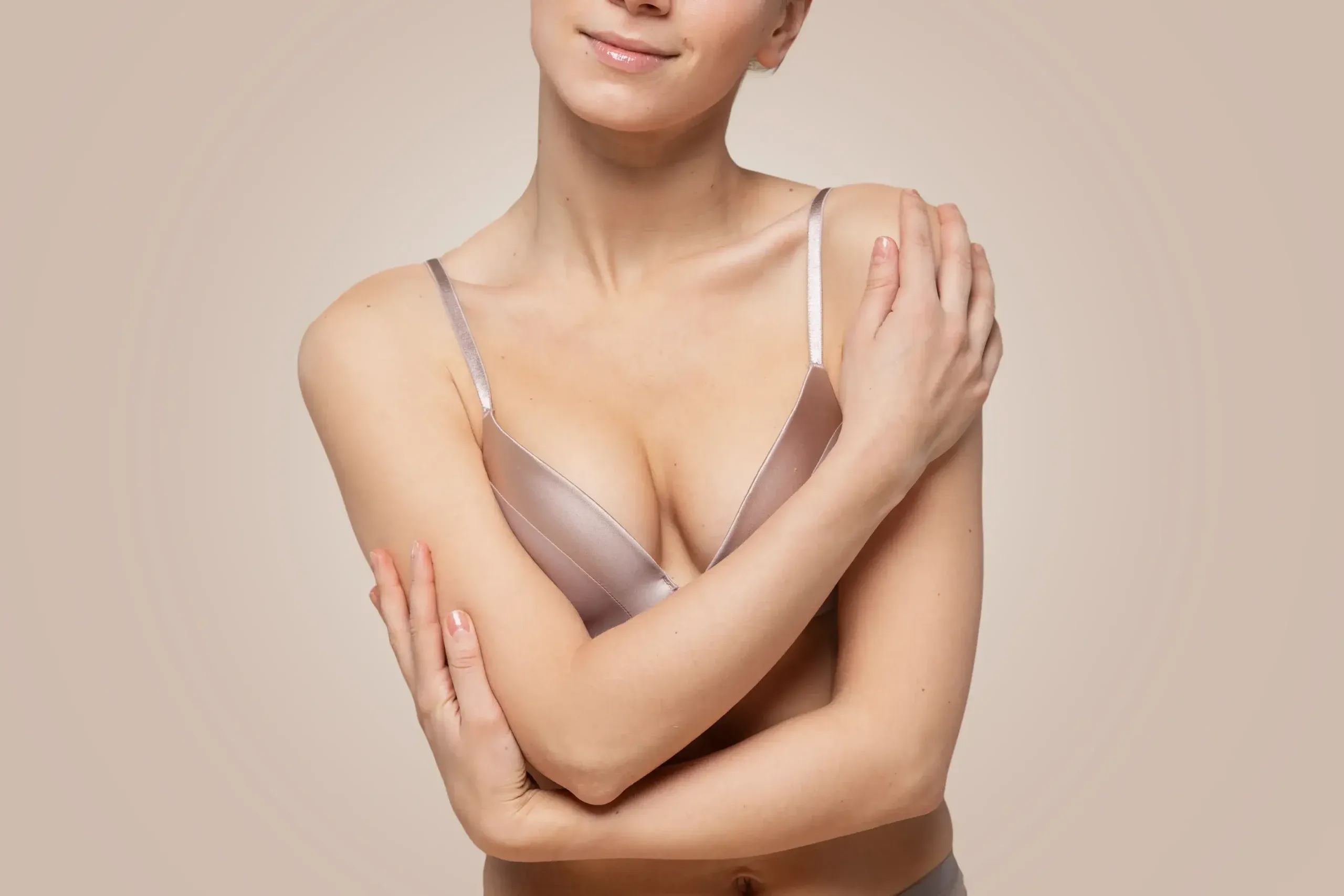
Breast augmentation in Zaragoza, also called breast surgery, gives the breasts more volume or a better shape. The first assessment takes place at our plastic surgery clinic in Zaragoza, on Calle de Escoriaza y Fabro, 7 (Delicias), with registered plastic surgeons.
Updated
Its Google listing has a rating of 5.0 from 504 reviews (14/10/2026).
The American Society of Plastic Surgeons (ASPS) notes that breast augmentation provides fullness and projection, but does not lift a very sagging breast; in that case a lift is needed. The full explanation is on that page.
There are many different reasons for seeking a consultation. According to the ASPS, some women feel their breasts are small, some have lost shape and volume after a pregnancy, weight loss or simply with the years, some notice that the upper part of the breast looks empty, some have one breast different from the other, and some have a breast that never developed in the same way. No reason carries more weight than another; what matters, the ASPS itself adds, is that you do it for yourself and not to please anyone else.
The difference in volume can be seen when you wake up, although the final shape needs a few weeks, while the swelling goes down and the skin settles into its new shape.
It suits a healthy woman whose breasts are already developed and who is neither pregnant nor breastfeeding. As for age, in its 2014 guidance for patients SECPRE advises against operating on minors for cosmetic reasons. Beyond that there is no ideal age: the maturity of the decision and a stable weight matter more.
The ASPS adds two signs that it may not be the right moment: expectations that the operation cannot fulfil, and a reason that is not your own. If you are in either of those situations, that is perfectly all right: it is talked through at the consultation and decided calmly.
At the visit your reasons and your health are reviewed, your breasts are measured and photographs are taken; you leave with the options clear and with no obligation to have the operation. The details for booking an appointment are in the section on how to get there.
The ASPS describes a consultation in which the surgeon goes over your medical history and what you usually take. Write it down before you go, because in the consulting room it is easy to forget something.
The examination includes detailed measurements of the size and shape of the breast, of the quality of the skin and of the position of the nipples and areolas. With that, the options and what you can expect are discussed, with no magic figures.
Implants can be round or anatomical, teardrop-shaped, and contain silicone or saline, according to the ASPS. Round ones tend to give more fullness in the upper part; anatomical ones follow the shape of the breast. Neither is better in the abstract: the choice depends on the tissue you have and what you are looking for.
According to the AEMPS, the most widely used authorised implants are silicone gel and saline ones, and in Spain only those bearing the CE mark may be marketed and implanted. The ASPS explains that saline is sterile salt water and that the gel feels slightly closer to breast tissue.
The surface is also a decision. The ASPS describes smooth implants as the softest to the touch, and textured ones as those that adhere to the tissue and move less. Ask which surface they are proposing and why, and write the answer down.
A very common question is how 350 cubic centimetres will look, and the honest answer is that it depends on the body where they are placed: the same volume looks one way on a narrow chest and another on a wide one, and it does not match a bra size either, which each manufacturer defines in its own way.
That is why volume is not chosen by a figure. The starting points are the width of your chest, your skin and tissue and the shape of the breast, and from there come the base, projection and volume of the implant. Before deciding, ask how they will show you the expected result on your own body, and bring photographs of breasts whose proportions you like, to explain what you mean without relying on words such as “discreet”.
The conversation takes place with your body in front of you: you are measured, the proportions you are looking for are discussed and you are told what change is reasonable with your tissue. If you have a photograph of yourself in profile in which you look good in a fitted garment, bring it: it shows where you are starting from better than a description.
The position of the implant and the route of entry (the fold under the breast, the areola or the armpit) are proposed by the surgeon according to your anatomy. The ASPS distinguishes two positions: under the pectoral muscle, or directly behind the breast tissue and over the muscle. In both cases the wound is closed in layers and the skin with stitches, skin adhesive or surgical tape.
The incisions take time to fade: the ASPS speaks of several months, even a couple of years. If what you need is to lift the breast, we talk about a mastopexy; if the base is narrow, about tuberous breasts; and if you already have implants, about a breast implant exchange. In Zaragoza we also hold consultations for mastopexy in Zaragoza, in case your breast needs height as well as volume; and if you are unsure whether what you have is sagging, read how to disguise a sagging breast and what options exist to lift it.
The operation takes place in an operating theatre, and SECPRE favours general anaesthesia; the final decision is the medical team's, case by case. When discharge is immediate, someone must take you, collect you and stay with you that night.
For the preparation, the ASPS mentions a blood test and adjusting your medication. Among the possible anaesthetics, the ASPS cites intravenous sedation and general anaesthesia. According to SECPRE, the procedure lasts between one and two hours.
First, the anaesthesia the team has decided on. Then the incision is made by the agreed route, the space is created, the implant is placed and the wound is closed. The ASPS notes that the result in terms of volume is visible as soon as the operation is over. The AEMPS states that the surgeon must have told you beforehand about the location and route, the type of implant, the type of anaesthesia, the date, the length of stay, the schedule of dressings and check-ups, the bra and the recovery time.
If anything on that list has not been explained to you, ask for it in writing. It is information you are entitled to, and it lets you plan the week: who goes with you, what clothes you bring, how you organise the house and your work.
In Zaragoza the assessment and the check-ups we indicate take place. Registered plastic surgeons of Clínica EGOS operate. Before you book a date, we tell you in writing who will operate on you, with their registration number with the medical association, and at which centre, with its health registration number.
The State Register of Healthcare Professionals (Registro Estatal de Profesionales Sanitarios) records their specialty; their registration is checked with the Spanish Medical Association (Organización Médica Colegial); and the registration of the centre falls, in Aragon, to the Government of Aragon. SECPRE also asks that the operating theatre be in a hospital or in a clinic prepared for any emergency.
The ASPS agrees: it recommends operating in a hospital or an accredited outpatient centre, for your safety. In Aragon, healthcare centres need administrative authorisation and must appear in the region's Register of Healthcare Centres and Services, according to its procedures portal.
The swelling goes down over several weeks. The support bra, work, sport and sun are resumed step by step, with your surgeon's permission.
When the operation is over, gauze and an elastic bandage or a support bra are put on, which according to the ASPS is worn at all times for as long as the surgeon says so. Some surgeons prescribe cleaning the wounds and applying an ointment; others leave tape or a dressing. You are asked to take things slowly until your surgeon allows more activity. Before you go home you are given the appointment for your first check-up.
Discomfort and swelling can last a few weeks, according to the ASPS, and that time is for reducing what you ask of your arms. The breast does not yet look final: the shape is refined as the inflammation goes down. Sometimes an elastic band is added to mould the shape, especially if you started with very small or asymmetrical breasts.
Over the months the breast settles and the scars change from a pinkish tone to a more discreet one. There is no timetable that is valid for everyone: at each check-up the surgeon tells you what you can resume. If during those weeks one breast seems more swollen than the other, see the article on what happens when one breast is more swollen after augmentation.
In its guidance SECPRE warns that breast implants do not last forever and proposes a medical check-up every year. In addition, weight, pregnancies and the years keep changing the breast.
The AEMPS is more specific: it recommends check-ups at one month, three months, six months, one year and then every year with your plastic surgeon. It also makes clear that the lifespan of an implant varies greatly from one person to another and cannot be predicted in a particular case. All surgery involves risks, and the surgeon must set them out for you at the consultation before you decide.
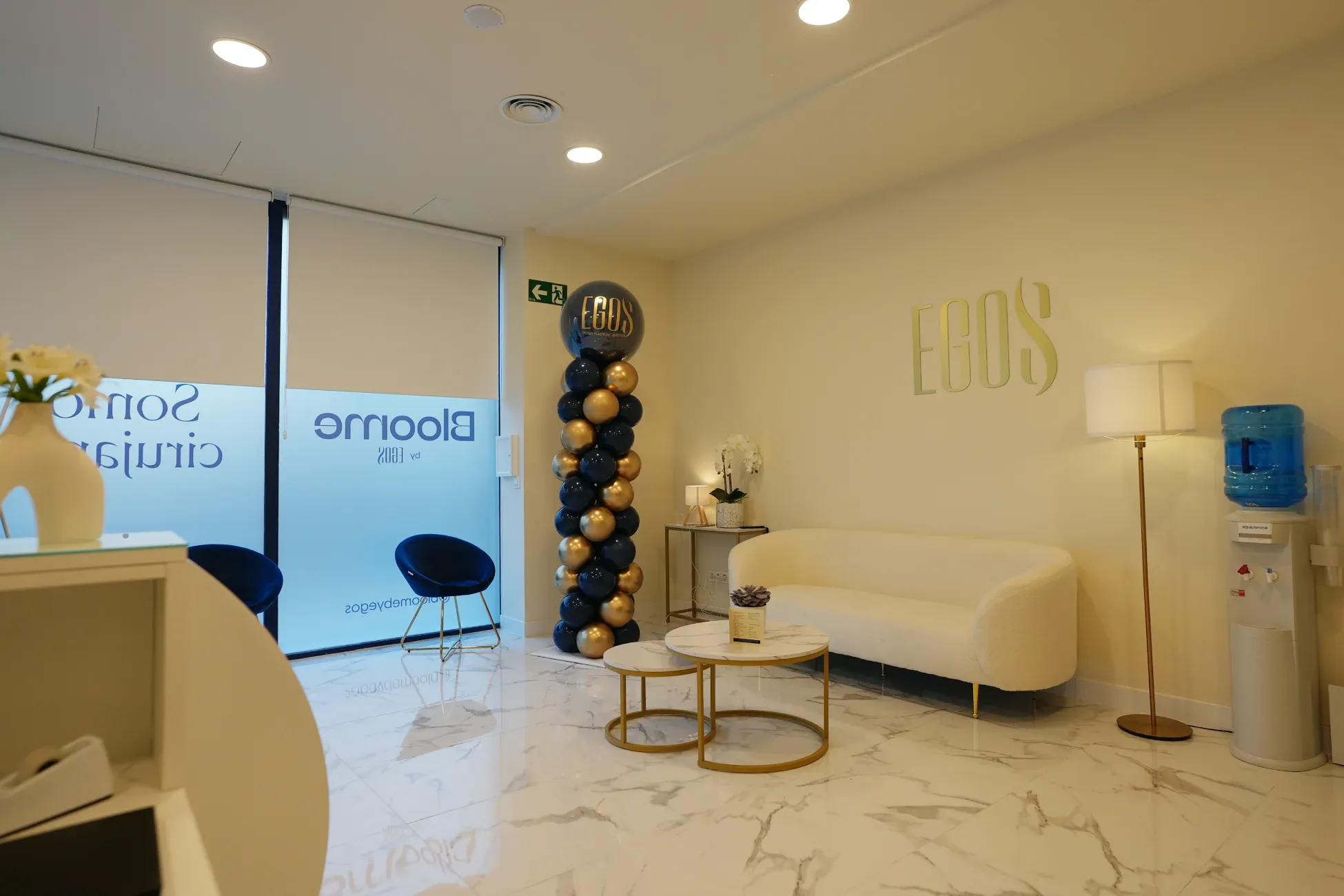
The plastic surgery clinic in Zaragoza occupies number 7 on Escoriaza y Fabro, in the Delicias district. It is the clinic where the first assessment and the check-ups take place, from Monday to Friday.
First of all, it is worth knowing what to expect from each visit: the first is for examining you and for you to leave with the options clear; if you decide to go ahead, you receive in writing the surgeon's name, the centre and the itemised quote; and the check-ups come afterwards.
Anyone arriving from elsewhere lands at Zaragoza-Delicias, the intermodal station: it brings together the high-speed and medium-distance trains and the central bus station, and has car parking and luggage trolleys. The last stretch is the C1 Cercanías line: Portillo is the stop after Delicias, and its station opens onto Calle de Escoriaza y Fabro, where the clinic is.
The clinic's details: Calle de Escoriaza y Fabro, 7, 50010 Zaragoza. Email: info@clinicaegos.com. Bookings by telephone: +34 608 95 04 84. Opening hours: Monday to Friday, from 10:00 to 20:00. If you prefer, fill in the web form.
If you come by car, when you book an appointment ask where to park and what time suits you best to arrive. If you are coming with someone on the day of a check-up, also write down the clinic's address and telephone number for them.
The AEMPS recommends a schedule of check-ups that begins at one month and extends over several years. For a breast augmentation in Zaragoza, for someone who lives in Calatayud, in Huesca or in Navarre, that means organising several journeys in the first year. Before fixing the date, ask which of those visits have to be at the clinic and which can be done with a doctor in your area, for example a dressing or the removal of stitches, and what report you should bring.
Think also about the first night. The ASPS asks that someone takes you and stays with you at least that night if the operation is outpatient. People who live far away usually solve it by staying at a relative's home or in a hotel nearby; decide it in good time and check with the surgeon from when you can travel back.
With that schedule, the first year brings several check-ups in addition to the assessment. If you live in Tudela, some 84 kilometres from the clinic and a little over an hour by car, each visit to Delicias means more than two hours on the road there and back. From Logroño, some 170 kilometres and almost two hours away, or from Pamplona, some 178 and two hours, each visit takes half a day and the total doubles. These are times without traffic: add parking or the connection with the C1.
The journey home after the operation also counts. Ask from when you can travel as a passenger and how to position the seat belt over the support bra; in the meantime, let someone else drive.
If you prefer the train, the comparison changes. According to Renfe timetables, the train takes 40 to 65 minutes from Tudela to Zaragoza-Delicias; from Logroño, around two hours, and from Pamplona, a little under two hours on the fastest trains and a little over two on the slow ones. From Tudela about twelve trains a day depart; from Logroño and from Pamplona, between four and six, so from those two cities it is best to fix the time of the appointment first. These figures are approximate, because they vary with the type of train and with timetable changes: check the one for the day of your appointment on Renfe.
We do not give an amount before examining you: it depends on the technique, the implant chosen and what is seen at the consultation.
You should receive a written, itemised quote: team fees, operating theatre and stay if there is one, anaesthesia, implants with their documentation, check-ups and later materials, such as the bra. Also ask what happens should a touch-up prove necessary later. SECPRE warns that a price far lower than the rest should make you doubt the implant.
The ASPS lists as usual items the surgeon's fees, anaesthesia, the facility, medical tests, post-operative garments and medication, and warns that fees depend on experience and on the type of procedure.
Until we have examined you, no amount is possible; it is determined by the technique and the implant. You then receive a written, itemised quote; ask whether it includes the implant with its documentation, the anaesthesia, the operating theatre and the check-ups.
The assessment takes place at the clinic on Calle de Escoriaza y Fabro. Before you book a date, we tell you in writing who will operate on you, with their registration number with the medical association, and at which centre, with its health registration number.
Call +34 608 95 04 84 or fill in the form on this page. The first visit is for talking with the surgeon and leaving with the options clear, with no obligation to have the operation.
By the C1 Cercanías line: the Zaragoza-Portillo stop is on the clinic's own street. If you arrive by long-distance train at Zaragoza-Delicias, the C1 takes you there at the next stop.
There is no ideal season for everyone. In summer the heat and wearing the support bra at all times weigh more, and the scars have to be protected from the sun; in winter, it is a matter of clothes that let you dress without raising your arms. You decide it with your surgeon according to your work and your plans.
It depends on your body: the same volume looks different on each chest and is not equivalent to a bra size. We start from your measurements and the images you bring, not from a figure, and you are shown how it would look on your body.
Round ones give more fullness at the top and anatomical ones follow the shape of the breast. Neither is better in general: the choice depends on your tissue and what you are looking for.
According to the AEMPS, they are the two most widely used fillings. The ASPS explains that saline is sterile salt water and that silicone gel feels slightly closer to breast tissue. The surgeon explains which one suits your case.
Between one and two hours, according to SECPRE; whether there is a night in hospital or discharge the same day is decided by the medical team, who tell you before the operation.
The AEMPS recommends check-ups at one month, three months, six months, one year and then once a year with your plastic surgeon.
That it meets the requirements of medical devices legislation. According to the AEMPS, in Spain only implants with that mark may be marketed and implanted. Ask which implant they are proposing and why.
Not when the reason is cosmetic. The portfolio of services of the public system (Royal Decree 1030/2006) does not include procedures that only seek to improve appearance. Reconstruction after an illness is a different situation, which the public system assesses.
Better not. The ASPS asks that someone takes you and brings you back and stays with you, at the very least, the first night if the operation is outpatient. If you come from outside Zaragoza, sort it out before buying the ticket.
If another clinic is closer to you, see Breast augmentation in Alicante, Breast augmentation in Barcelona, Breast augmentation in Girona, Breast augmentation in Granada, Breast augmentation in Madrid and Breast augmentation in Málaga.
In Zaragoza we also hold consultations for: Buttock augmentation in Zaragoza, Liposuction in Zaragoza, Breast lift in Zaragoza, Otoplasty in Zaragoza and Rhinoplasty in Zaragoza.
SECPRE, guidance for patients on breast augmentation with implants (2014 statement), and its website on breast surgery. · ASPS, breast augmentation: candidates, consultation, preparation, implants, procedure, recovery, results and cost. · AEMPS, information for patients on breast implants (updated on 20/07/2026). · Ministry of Health, State Register of Healthcare Professionals. · Government of Aragon, authorisation of healthcare centres and services.
Content reviewed by Dr. Santiago Elvira i Barberà, plastic surgeon (Medical Association member no. 49756) · October 2026
For information only; it does not replace a consultation with a healthcare professional. The results of any procedure depend on each patient and are assessed individually. Clínica EGOS.
C. de Escoriaza y Fabro, 7, Delicias, 50010 Zaragoza
Black Days · Limited places
Up to 40% off surgery and 20% off aesthetic medicine throughout November. Book your free first consultation before places run out.