Clínica EGOS Zaragoza
C. de Escoriaza y Fabro, 7, Delicias, 50010 Zaragoza
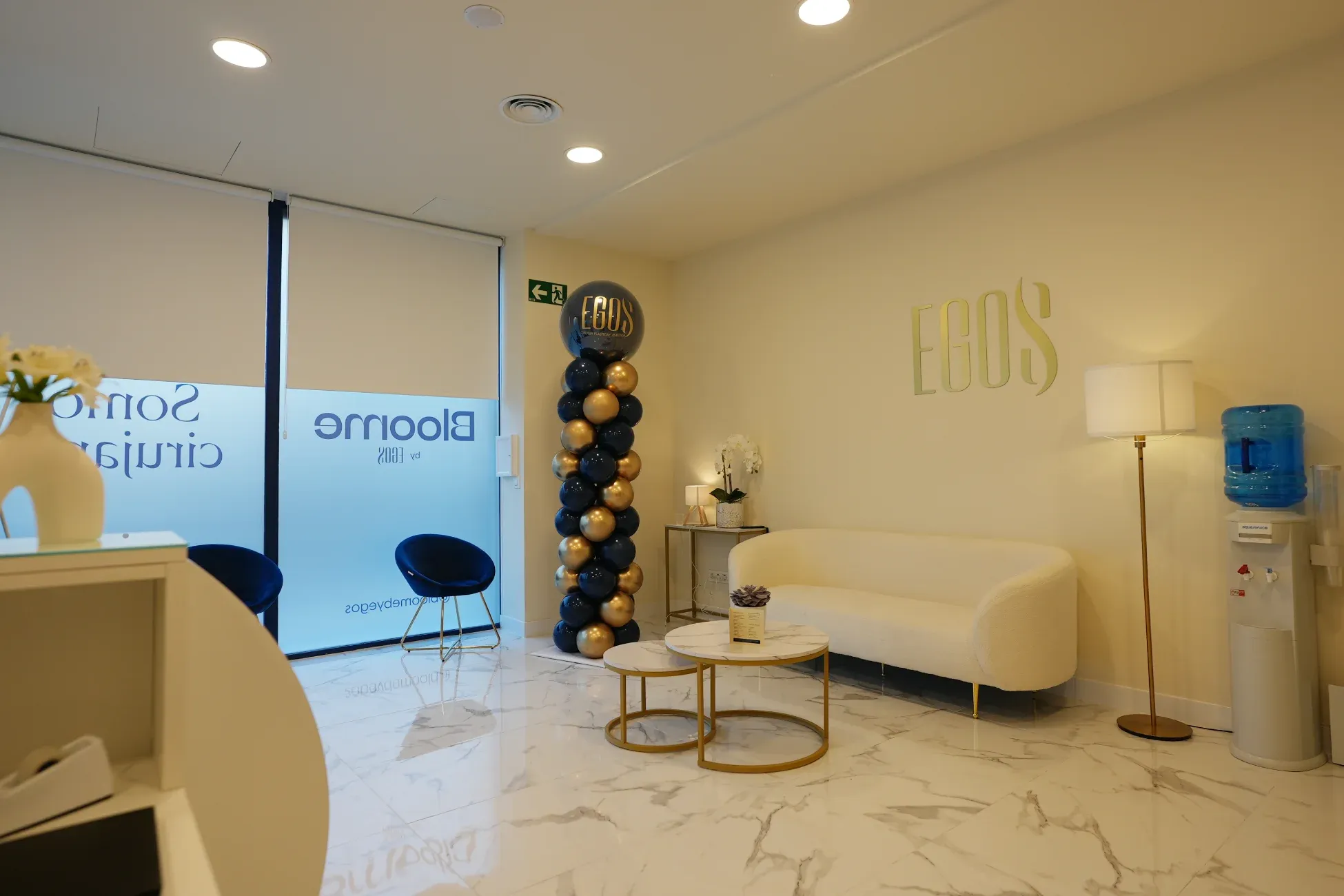
Facial Surgery · Zaragoza
Rhinoplasty in Zaragoza is the operation that changes the shape of the nose, improves breathing or does both at once. Anyone looking into it tends to come across the expression "ultrasonic rhinoplasty" on several pages, and this one stops right there: what really changes with that technique, what the studies say and how the septum is assessed. We see patients in Zaragoza, in Delicias; the technique in general is on our ultrasonic rhinoplasty page.

The difference from the traditional one lies in a tool, not in the aim of the operation. In the ultrasonic one, also called piezoelectric, the cuts in the bone are made with a vibrating-tip instrument; in the traditional one small chisels, the osteotomes, and a mallet are used. The rest, how the skin is lifted or how the cartilage and the septum are worked, is the same.
That tool only acts on bone, so its usefulness depends on how much bone has to be worked: filing down a hump, narrowing a wide base or straightening crooked nasal bones. If what matters most in your case is the tip, which is cartilage, the tool changes little.
According to a meta-analysis by Khajuria and colleagues (a systematic review published in 2022 in the journal Plastic and Reconstructive Surgery Global Open), which brought together ten studies with 554 patients, nine of them randomised trials, with the piezoelectric technique there was less oedema, less bruising and less pain than with the conventional one, and there was no difference in how long the osteotomy or the whole operation lasted. The authors describe the support as weak, because the evidence is of low quality, and they refer it to the early postoperative period.
In other words: there are signs that the early postoperative period is somewhat better with ultrasound, and that summary says nothing about how the nose looks years later. We do not promise more than is known: the tool does not replace planning or the experience of the person operating.
A rhinoplasty can be cosmetic, functional or both at once. The ASPS points out that an operation to improve an obstructed airway requires careful study of the structure of the nose and its relation to airflow, and that deviation of the septum is one of the most common causes of poor breathing. That is why a rhinoplasty consultation in Zaragoza is not limited to looking at the profile: you are also asked how you breathe.
When the septum is corrected too, the SECPRE speaks of rhinoseptoplasty. If you have already had nose surgery and are not happy with the result, tell the surgeon and bring the report of the earlier operation; you will find more information on our secondary rhinoplasty page.
What rhinoplasty corrects, the difference between open and closed, who is a candidate and what recovery is like week by week are explained on our rhinoplasty in Barcelona page. At EGOS we operate under general anaesthesia, and for the first days we recommend sleeping on your back, with your head raised, and not blowing your nose hard.
It all starts with you: what bothers you about your nose and what you would change. The surgeon goes over your history, examines the nose from the front, in profile and from below, and checks how air passes through each nostril. Bring photos of yourself from before any blow or operation, if you have them. And remember that a nose you like on another face is not a promise for yours: every face is different and slightly asymmetric, according to the ASPS. Going does not commit you to surgery: it is there to inform you and to let you decide without hurry at home.
The registered plastic surgeons of Clínica EGOS make up the team that examines you, proposes the technique and accompanies you at the check-ups.
Before you book a date, we tell you in writing who will operate on you, with their registration number with the medical association, and at which centre, with its health registration number.
Our plastic surgery clinic in Zaragoza has this address: C. de Escoriaza y Fabro, 7, 50010 Zaragoza, in the Delicias district. The Cercanías Zaragoza-Portillo station is on the same street.
Telephone: +34 608 95 04 84. Email: info@clinicaegos.com. We are open Monday to Friday, between ten in the morning and eight in the evening. On Google Maps, the clinic's listing shows a rating of 5.0 from 504 reviews (checked on 14 October 2026).
If you are coming from Huesca, Teruel, Navarre, Soria, La Rioja or Lleida, Zaragoza-Delicias station is where the high-speed trains and the buses arrive.
A rhinoplasty takes more than one visit: assessment, written plan, preparation, operation and check-ups. The ASPS adds that preparation may include a lab test and that the surgeon tells you when to come back for follow-up. How many visits will be in person is up to the surgeon; those that require looking at or touching the nose, such as removing the splint, cannot be done from home.
Of those, the one that most shapes the trip is having the splint removed, a few days after surgery: ask when and where it is done so you can decide whether to stay nearby that week or make two trips. And keep a note of whom to call if something worries you once you are home.
The figure for a rhinoplasty cannot be given without seeing the nose. It depends on how much needs correcting, whether the septum has to be touched and the anaesthesia; that is why it arrives in writing once the surgeon has seen your case, with fees, operating theatre, anaesthesia, materials and check-ups listed separately. We give it to you in writing, itemised.
If you are considering rhinoplasty in Zaragoza, start with an assessment: the surgeon examines your nose, tells you which technique suits and what you can expect, and does not oblige you to anything. To book it you can call +34 608 95 04 84 or write using the form on the website.
If another clinic is closer to you, see Rhinoplasty in Alicante, Rhinoplasty in Barcelona, Ultrasonic rhinoplasty in Madrid and Ultrasonic rhinoplasty in Bilbao.
In Zaragoza we also see patients for: Buttock augmentation in Zaragoza, Breast augmentation in Zaragoza, Liposuction in Zaragoza, Breast lift in Zaragoza and Otoplasty in Zaragoza.
This page draws, as of October 2026, on the ASPS website (rhinoplasty), on that of the SECPRE (nose surgery) and on the meta-analysis by Khajuria and colleagues published in 2022 in Plastic and Reconstructive Surgery Global Open (PMID 36448013).
Content reviewed by Dr Santiago Elvira i Barberà, plastic surgeon (registration no. 49756 with the medical association) · October 2026
For information only; it does not replace a consultation with a healthcare professional. The results of any procedure depend on each patient and are assessed individually. Clínica EGOS.
C. de Escoriaza y Fabro, 7, Delicias, 50010 Zaragoza
It depends on how much needs correcting, on whether the septum is also worked on and on the anaesthesia. After seeing you, the surgeon gives you a written quote, with medical team, theatre, anaesthesia, materials and check-ups listed separately.
Because "ultrasonic" or "piezoelectric" names a tool for cutting bone, not a different operation. A 2022 review found less oedema, bruising and pain in the first days, with low-quality evidence. How much bone has to be worked is decided by the surgeon after examining you.
The SECPRE uses rhinoseptoplasty for a rhinoplasty in which a deviated septum is also corrected to improve breathing. The ASPS explains that, if the septum is deviated, it is straightened during the operation; the surgeon assesses this when examining you.
Lying on your back with your head raised: it is what we recommend at EGOS and what the SECPRE describes. It is a good idea to have pillows ready before the date and not to blow your nose hard during the first week.
The surgeon listens to you, goes over your history, examines your nose and how you breathe, takes photographs and explains the options. It is at our Zaragoza clinic, the one at the address above, and going does not oblige you to have surgery.
Registered plastic surgeons from the Clínica EGOS team. Before you book a date we inform you in writing of who is operating, with their registration number, and of the centre where it will take place, with its health registration number.
Ask at the assessment: the surgeon tells you which tests are needed before surgery, how far in advance and whether ones done near home will do. If they will, you save yourself a trip.
No obligation
Book a personalised assessment with our team of surgeons. We answer all your questions and design a plan tailored to you, with full transparency.