on Google
Breast Surgery · Madrid
Breast augmentation in Madrid
Breast augmentation in Madrid is a well-known procedure, but it raises many questions: which technique to choose, how the size of the implant is decided, where it is carried out and what recovery is like. At Clínica EGOS we approach breast augmentation as a medical and personal decision, one that starts with an individual assessment rather than a catalogue of sizes. We have five clinics in the Community of Madrid, three in the city of Madrid (Sagasta, Retiro and Castellana) and two elsewhere in the region (Alcobendas and Móstoles), and a team of registered plastic surgeons.
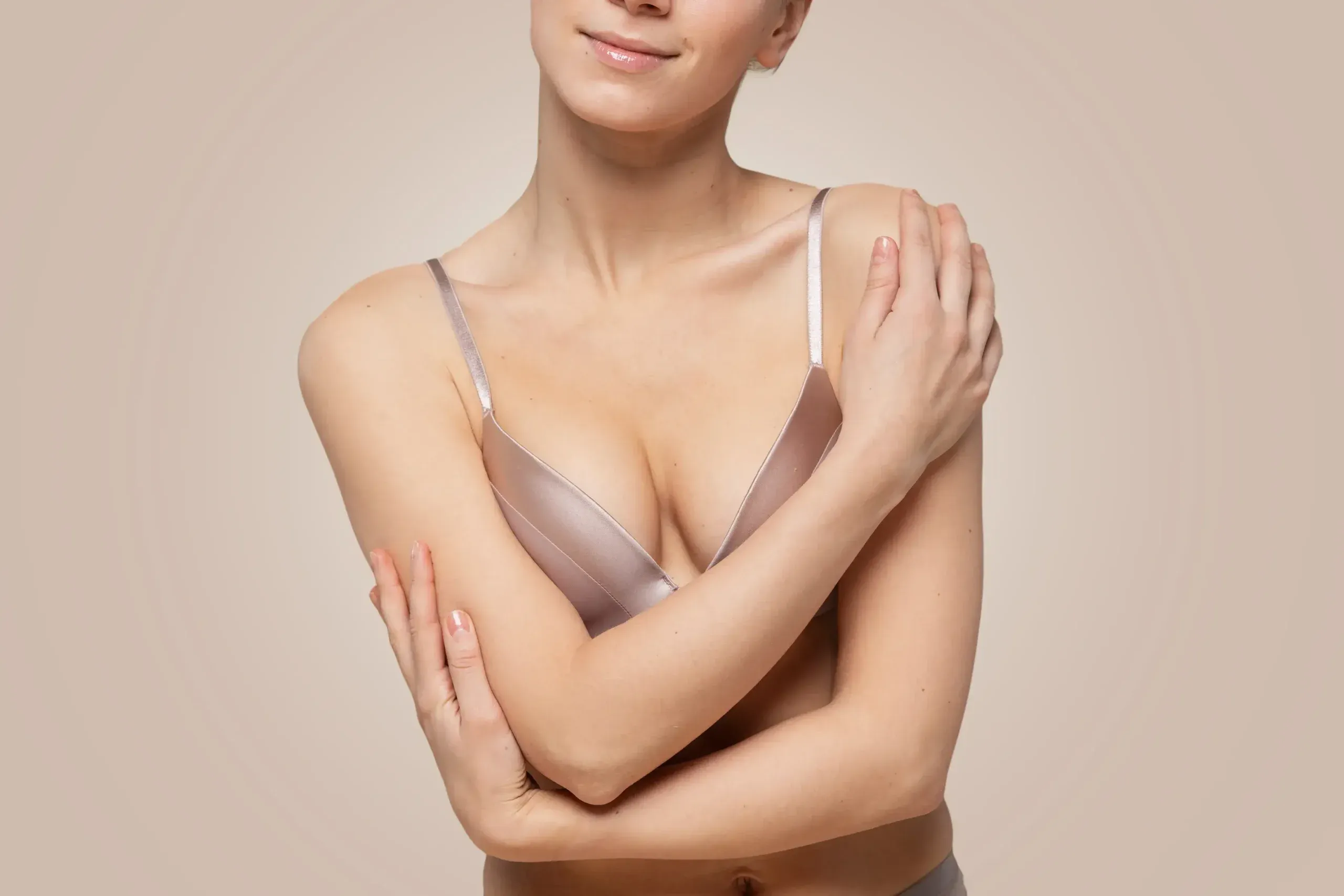
On this page we explain what breast augmentation involves, what is assessed at the first consultation, what types of implant exist, what the process looks like from start to finish and what a quote should include, so that you arrive at your consultation with a clear picture.
What is breast augmentation and who is it for?
Breast augmentation, also known as augmentation mammoplasty or breast operation, is a plastic surgery procedure that changes the volume, shape or symmetry of the breasts. It can be done with breast implants or with the patient's own fat, and the choice depends on each person's anatomy and on what she wants to achieve. It is not an operation that can be settled with a size chosen in advance: the size, shape and technique are decided at the consultation, after an examination and after listening to you.
The reasons why someone considers breast augmentation are very varied. Some women notice that their breasts have changed in volume after a pregnancy, breastfeeding or weight loss. Others have a difference in size between the two breasts, or simply want a different volume from the one they have. None of these reasons counts for more than another: what matters is that the decision is yours, and that it is made with information and without rushing.
In general, breast augmentation is considered for adult women in good health. The Spanish Society of Plastic, Reconstructive and Aesthetic Surgery (SECPRE), the scientific society of the specialty, recommends in its guide for patients that it should not be carried out for aesthetic reasons in minors. If there is an underlying condition or another circumstance that advises against it, the surgeon assesses it individually at the first consultation.
For the American Society of Plastic Surgeons (ASPS), breast augmentation can give the breasts more fullness and projection and balance the contour of the chest with that of the hips, and can also restore volume lost after weight loss or pregnancy. What it does not do is correct a very sagging breast, for which a lift may be needed.
Why choose Clínica EGOS for breast augmentation in Madrid
These are the reasons we offer to those looking for breast augmentation in Madrid, and all of them can be checked:
Our own team, who accompany you from start to finish
Our own medical team takes care of everything: the first assessment, the plan, the procedure and the follow-up afterwards.
Five clinics in the Community of Madrid
You can request your first assessment at our cosmetic surgery clinic in Madrid, at Sagasta, or at Retiro and Castellana, also in the city of Madrid, and at Alcobendas or Móstoles, elsewhere in the region, whichever is closer to your home or work. All of them are part of a network of more than 40 clinics in Spain, Andorra and Portugal.
Registered plastic surgeons
The surgeons on our team who see patients for breast augmentation are registered plastic surgeons. You can look at the team profiles and check their registration with the corresponding medical association before booking an appointment.
An assessment before any decision
Our path is always the same: a first assessment, a personalised plan in which the technique and the quote are explained, the procedure itself and follow-up during the postoperative period. Asking for an assessment does not commit you to having surgery.
What is the first consultation for breast augmentation in Madrid like?
The first consultation is a medical appointment, not a sales formality. It begins by listening to you: what you are looking for, how long you have been thinking about it and what you expect from the result. Then the surgeon takes your medical history and examines your breasts to understand your starting point.
During this examination, several aspects that determine the technique and the possible size are assessed: the base of the breast, the thickness and elasticity of the skin, the amount of your own tissue, the symmetry between both sides and the proportion with your chest and the rest of your body. Your physical activity and daily life are also taken into account, because they influence the choice of implant and the recovery.
If you want to become pregnant or breastfeed in the future, it is important to mention it from the first visit. It is something the surgeon takes into account when planning the procedure.
Before surgery, the surgeon usually requests an imaging study of the breast: according to the SECPRE recommendations, an ultrasound scan for patients under 40 and a mammogram for those over that age. You will also be given the informed consent, a written document that explains the procedure, the alternatives and the risks. It is advisable to read it calmly, with your questions answered and with enough time before the procedure, rather than signing it in a hurry.
As with any surgery, there are risks, and the surgeon explains them to you individually at the consultation, before you make any decision. Results vary from one person to another and cannot be promised.
Types of implant, access route and plane
Once your case has been assessed, there are several technical decisions that are made together and that depend on your anatomy: the technique, the type of implant, the place where it is positioned and the route by which it is reached.
Implants or your own fat
The two main options are breast implants and the transfer of the patient's own fat. They are not equivalent: each has its indications and its limits. Implants allow the volume to be planned with more precision; your own fat is considered in selected cases and for more moderate changes, and it requires having donor areas.
Shape and profile of the implant
Implants differ in their shape, profile and size. The round implant spreads the volume more evenly and adds fullness in the upper part of the breast; the anatomical implant concentrates the volume in the lower part and is considered when that silhouette is wanted or there is little tissue of your own in that area. The profile, more or less projected, and the width of the base are also chosen according to your chest and your breasts. There is no implant that suits every woman equally: the choice is made with your measurements in front of us.
Plane: above or below the muscle
The implant can be placed behind the pectoral muscle (submuscular plane), behind the mammary gland and over the muscle (subglandular plane) or in a mixed plane (dual plane), in which it is covered partly by the muscle and partly by the gland. Each plane has advantages and drawbacks that the surgeon explains to you according to the thickness of your tissue and the type of implant.
Access route
The incision can be made around the areola, in the fold under the breast or in the armpit. The route is decided according to your anatomy, the type of implant and the surgeon's preference, and the scar depends on the route chosen and on how each person heals. At the consultation, the advantages and difficulties of each option are explained to you.
When it is advisable to wait or consider another option
Not every woman who asks about breast augmentation is a candidate for surgery at that moment, and saying so is part of the surgeon's job. It may be advisable to wait if the breasts are still changing because of a recent pregnancy or breastfeeding, or during ongoing weight loss, or if expectations do not match what is possible in your case. It may also be necessary to consider another technique, on its own or combined, when what predominates is not a lack of volume but sagging of the breast. The final indication is established only after an in-person medical assessment.
Volume planning and simulation
The size of the implant is not chosen solely on the patient's wishes. It is planned at the consultation based on your measurements, the width of your chest, the tissue you have and the shape of your starting breast. The profile of the implant and the width of its base also follow from this.
To help you picture volumes, at the assessment the surgeon can use sizers or simulations. They are a guide for talking about volume and shape with the surgeon, not a promise of the final appearance: the result depends on each anatomy and each person's healing.
A practical tip: come to the consultation with photographs of breasts whose shape or proportion you like and with an idea of what you do not want. It is more useful than a figure for the volume, because it lets the surgeon understand what you are looking for.
The operation: preparation, anaesthesia and hospital
Before the procedure
After the assessment and the preliminary tests, the team gives you the instructions to follow in the days beforehand and answers any remaining questions. The surgeon explains the technique, the type of implant, the access route and the follow-up plan, and you receive the informed consent and the quote in writing. According to the ASPS, preparation may include a blood test, adjusting medication, stopping smoking and avoiding some medicines because they promote bleeding.
The day of the operation
The operation takes place in an operating theatre under anaesthesia, which is decided with the medical team according to your case. Depending on the anaesthesia and each situation, the patient may go home shortly after the operation, as day-case major surgery, or stay in overnight. The team tells you in advance.
Where the operation is carried out
Before you book a date we tell you in writing which centre you will be operated in and who your surgeon and anaesthetist will be.
Recovery and long-term check-ups
The first days and weeks
After the procedure, a period of relative rest is recommended, along with wearing a special bra for as long as the medical team indicates. Daily activity is resumed gradually, and exertion and sport later on, always following the surgeon's guidelines. The specific timescales vary from one person to another and from one technique to another, and are set out at the check-ups.
The first months
The breast changes during the first few months: the swelling goes down gradually and the implant settles. The ASPS explains that an augmentation gives larger breasts straight away, but that the final result takes a few weeks, while the swelling subsides and the skin stretches, and that some patients need an elastic band to help shape the breasts. In a patient-information article from the ASPS (2021), a surgeon estimates that feeling completely normal again can take from six months to a year, and that most scars fade around the one-year mark.
Check-ups and long-term follow-up
Follow-up is part of the process. Check-ups are scheduled in the first few weeks to monitor progress, and the SECPRE also recommends a yearly clinical check-up with the surgeon to keep an eye on the state of the implants in the long term.
Clínica EGOS surgeons in Madrid
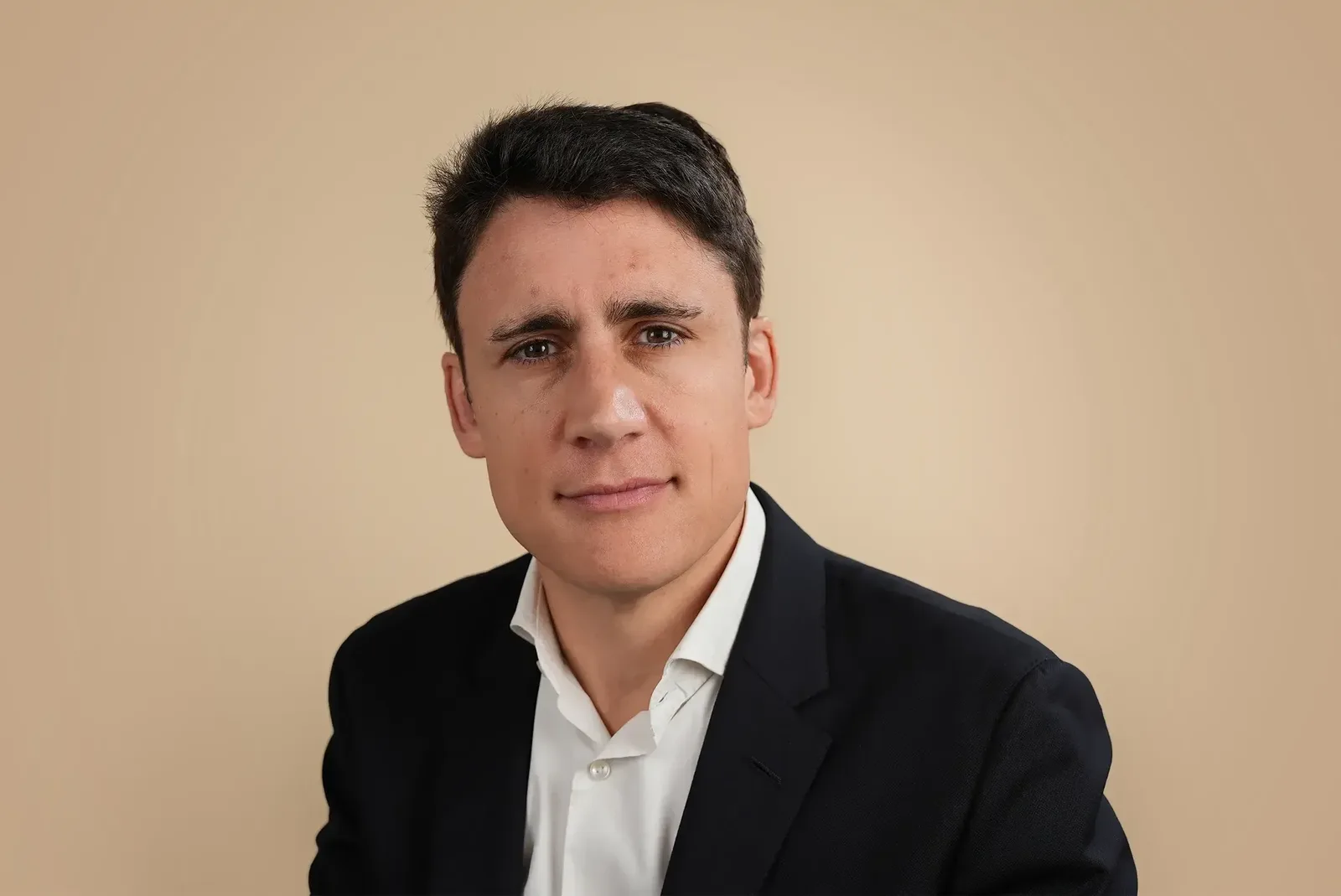
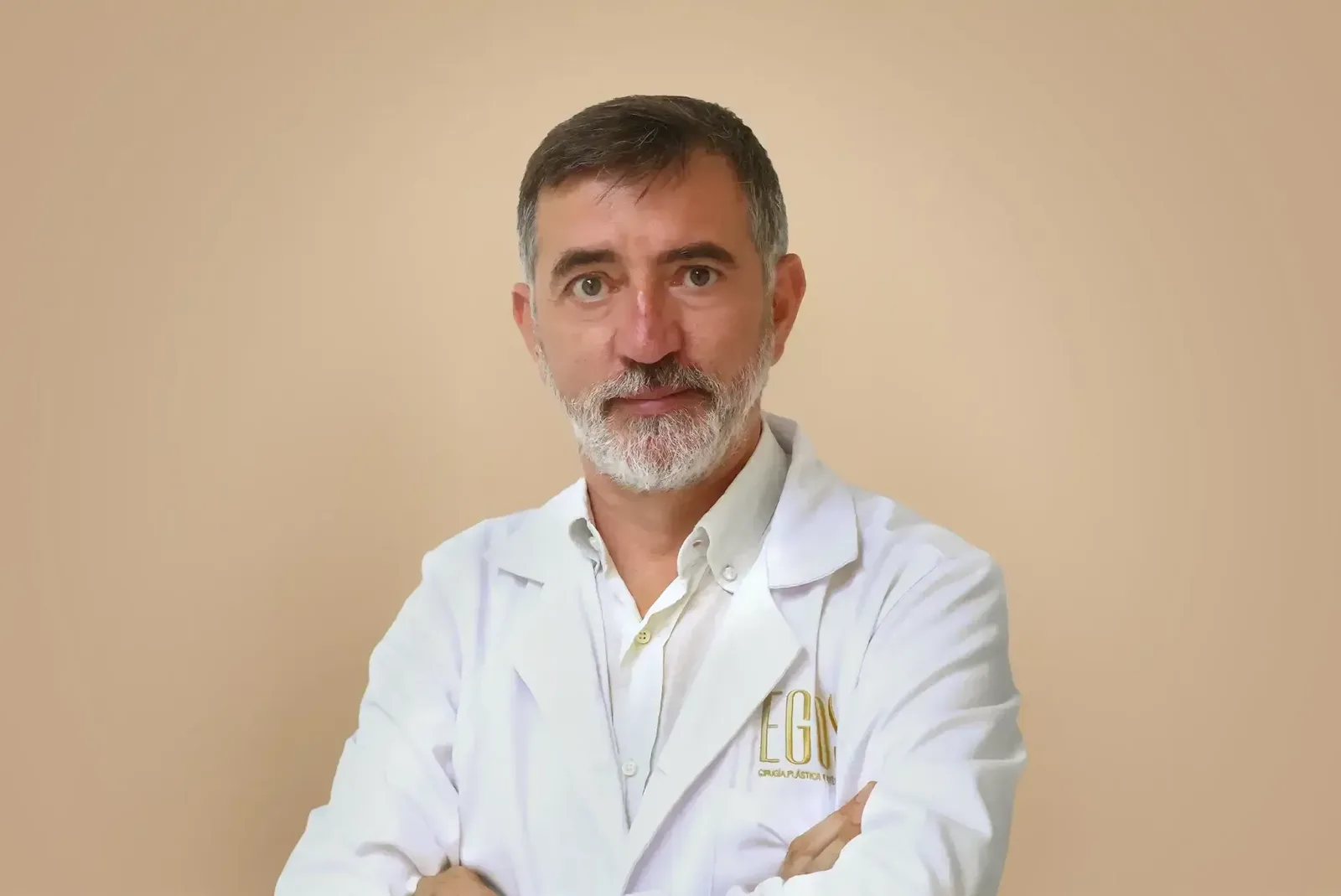
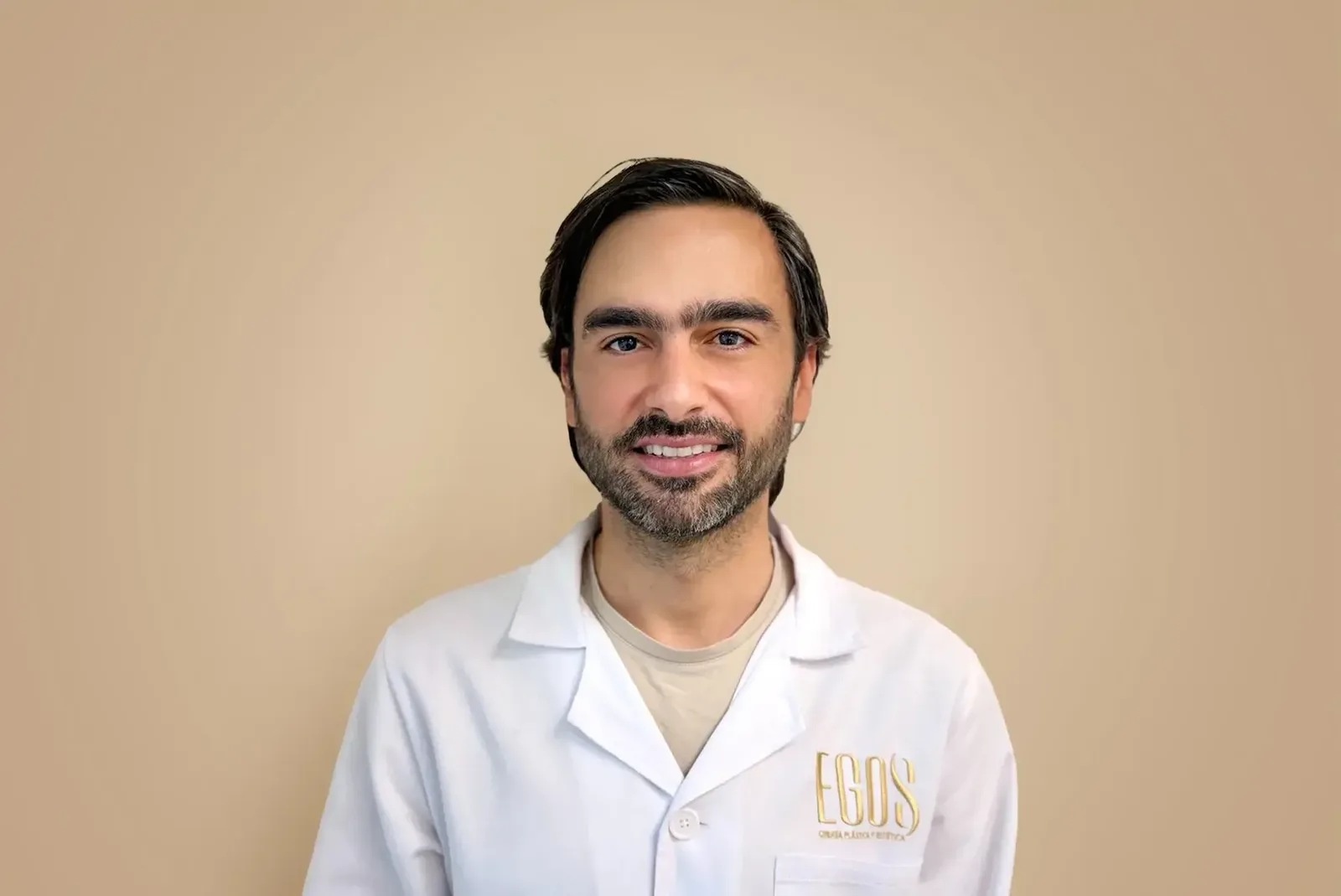
This page has Dr Santiago Elvira i Barberà as its reference surgeon. In Madrid, the plastic surgery team also includes, in breast surgery, Dr Gabriel Poole Derqui and Dr Pablo Arias Abad. Each has a public profile with their registration number.
Dr Santiago Elvira i Barberà (registration no. 49756), reference surgeon
The reference surgeon for this page is Dr Santiago Elvira i Barberà, plastic surgeon and co-founder of Clínica EGOS (registration no. 49756): he signs and reviews this content. A specialist in Plastic, Reconstructive and Aesthetic Surgery and a member of the SECPRE, he studied Medicine at the University of Barcelona and trained as a plastic surgeon through the Spanish MIR residency system between Seville and Barcelona. He founded Clínica EGOS together with Dr Gomes.
Dr Gabriel Poole Derqui (registration no. 280832563)
Plastic, aesthetic and reconstructive surgeon. He graduated in Medicine and Surgery from the University of Navarra and specialised through a residency in the Department of Plastic Surgery and Burn Treatment at the Hospital Universitario Vall d'Hebron. He has undertaken doctoral studies at the Autonomous University of Barcelona and is a full member of the SECPRE and of the Spanish Society of Autologous Fat Transplantation.
Dr Pablo Arias Abad (registration no. 282874332)
A surgeon with a medical degree from the Universidad CES, he completed his training in plastic, reconstructive and aesthetic surgery at the Virgen del Rocío University Hospital in Seville, with stays in London, Rio de Janeiro, São Paulo and Paris. He has lived in Madrid since 2016 and specialises in otoplasty, blepharoplasty, breast surgery and body contouring.
What the quote for breast augmentation in Madrid includes
The cost of breast augmentation is not the same for every patient. It depends on the complexity of the procedure, the technique chosen, the type of implant and the needs of each case. That is why, at our clinics, the quote is explained transparently after the assessment, once it is known which technique is right for you.
Whether at our clinics or at any other, a breast augmentation quote should be provided in writing and detail which items it includes: the fees of the medical team, the operating theatre and anaesthesia, the implants, the follow-up check-ups and the postoperative materials, such as the bra. Also ask for an explanation of what happens if you need an additional check-up or an implant replacement.
Transparency: who operates on you and where
According to the SECPRE, whoever operates on you must be a qualified specialist in Plastic, Aesthetic and Reconstructive Surgery, and must do so in a hospital operating theatre or one in a clinic equipped to deal with emergencies. Before deciding, you can ask for the surgeon's name and registration number and the health-registry number of the centre, and check them yourself.
Questions worth bringing to your first consultation
Writing your questions down helps make sure none of them goes unanswered. We suggest a few: which options are suitable in your case and which are ruled out; what type of implant, plane and access route are proposed and why; what anaesthesia will be used and whether you will stay overnight; what recovery will be like in your daily life; which check-ups are planned and who will carry them out; what the quote includes and what it does not; and how the procedure would affect future breastfeeding. It is normal to leave the first visit with more questions than you came with: the consultation is there for that, among other things.
Sources for this page
We have consulted the SECPRE decalogue on breast implants, from January 2014, the ASPS sections on this type of surgery and, in the BOE, Royal Decree 1030/2006.
Content reviewed by Dr Santiago Elvira i Barberà, plastic surgeon (registration no. 49756) · October 2026
Book your first consultation for breast augmentation in Madrid
If you are considering breast augmentation in Madrid, the first step is an assessment with one of our surgeons. We will listen to what you are looking for, study your case and explain the options that suit you, with their limits. You can call +34 932 71 80 69 or book an appointment from this page. No commitment.
Informative content; it does not replace a consultation with a healthcare professional. The results of any procedure depend on each patient and are assessed individually. Clínica EGOS.
Where we treat you
Clínica EGOS Madrid Retiro
Calle del Doctor Castelo, 20, Retiro, 28009 Madrid
Frequently asked questions
How long does recovery take after breast augmentation?
Recovery from breast augmentation varies from person to person and from one technique to another. There are usually a few days of relative rest at first, a gradual return to daily activity and a later return to sport, always following the surgeon's guidelines. The breast continues to change for months as the swelling goes down and the scars mature.
When can I go back to work?
It depends on the type of work, the technique and how each person progresses. An office job is usually resumed sooner than one that demands physical effort or lifting with the arms. The surgeon will give you an approximate timescale at the consultation and adjust it at the check-ups.
When can I exercise after breast augmentation?
Exercises that involve the pectoral muscles and intense exertion are resumed later than daily activity, gradually and following your surgeon's instructions. There is no single timescale: it is set out at the check-ups.
When can I drive after the operation?
When the surgeon gives the go-ahead: it depends on the technique, on the pain medication and on how you move your arms. Arrange the journey home and the first few days with someone you trust.
Does breast augmentation hurt?
The operation is done under anaesthesia, so there is no pain during the procedure. Afterwards there is discomfort and tightness, more intense in the first days, which are treated with the medication the team prescribes. Each person experiences it differently.
What anaesthesia is used and do I need to be admitted?
The anaesthesia and whether you are admitted are decided by the medical team according to your case. Some patients go home the same day and others sleep at the centre; the team tells you before the operation.
Will I be able to breastfeed if I have surgery now?
It depends on the technique and on each case. Some techniques may affect breastfeeding, so it is advisable to tell the surgeon from the first consultation if you are planning to become pregnant.
Will I be able to have mammograms with implants?
Yes, mammograms can be carried out with implants, but you should mention that you have them so that the staff can adapt the technique and, if necessary, the radiologist can complement the test with others.
Are breast augmentation and a breast operation the same thing?
Yes. “Breast operation” is what many people call breast augmentation when the aim is more volume. At our Madrid clinics the first step is the same: an assessment with the surgeon.
How long do implants last?
Implants are durable, but they are not considered to last a lifetime. Over the years they may need to be checked or replaced, which is why the SECPRE recommends an annual clinical check-up with the surgeon.
How is the implant size chosen and what bra size does it equal?
There is no fixed equivalence between the cubic centimetres of the implant and bra size, because each chest, each tissue and each clothing brand gives different results. The surgeon decides the volume with your measurements and, if possible, with a trial on your own body.
Does breast augmentation correct a sagging breast?
On its own, not always. When the main problem is sagging rather than lack of volume, the surgeon may suggest a lift (mastopexy), alone or combined with an implant.
Where do the scars end up?
They depend on the access route: around the areola, in the fold under the breast or in the armpit. Over time they fade, but their final appearance depends on how each person heals.
What is the minimum age for breast augmentation?
The SECPRE recommends that it should not be carried out for aesthetic reasons in minors, because it requires the psychological maturity needed to make the decision.
Does Spanish Social Security pay for it?
Not when the aim is aesthetic. Royal Decree 1030/2006, which sets out which services the public system funds, excludes techniques that only seek to improve appearance and those unrelated to illness, accident or congenital malformation. If your situation is reconstructive, the public system assesses it.
How much does breast augmentation cost in Madrid?
There is no single price. The cost depends on the technique, the type of implant and the needs of each case, and it is explained in writing after the assessment, together with what it includes.
Where can I request a first assessment for breast augmentation in Madrid?
You can request it at any of our clinics in the city of Madrid (Sagasta, Retiro and Castellana) or elsewhere in the region (Alcobendas and Móstoles). When you book an appointment we tell you which surgeon and which clinic will see you.
No obligation
Book your appointment and take the first step
Book a personalised assessment with our team of surgeons. We answer all your questions and design a plan tailored to you, with full transparency.