
on Google
Breast Surgery · Barcelona
Breast augmentation in Barcelona
Anyone looking for breast augmentation in Barcelona usually faces many options and few clear answers: which implant to choose, how the size is decided, who operates and how long recovery takes. At Clínica EGOS we see breast augmentation, also called a breast operation or augmentation mammoplasty, as a decision made with the surgeon, after being examined and listened to, and not from a catalogue of volumes. We see patients at five clinics in Barcelona (Balmes, Aribau, Guinardó, Madrazo and Poblenou) and have a team of registered plastic surgeons.

We explain what it involves, what is looked at in the first visit, what options exist, what the path to the check-ups is like and what a quote should contain, so that you arrive knowing what to ask.
What does breast augmentation involve, and who is it considered for?
It is a plastic surgery operation, technically called augmentation mammoplasty, that changes the size, contour or symmetry of the breasts. It is done with implants or with your own fat. Which option suits each woman is decided by the examination, not by a size fixed in advance.
The reasons vary: a breast that has lost volume after a pregnancy, breastfeeding or a change in weight, breasts of different sizes, or wanting a different volume. All are legitimate. What counts is that you decide, with information and without rushing.
We are talking about adult women in good health. For cosmetic reasons, SECPRE advises against operating on minors, according to its 2014 guidelines for patients. If there is a prior illness or another reason to wait, the surgeon looks into it in each case.
The American Society of Plastic Surgeons (ASPS) adds that the breasts are usually already fully developed, that there is no pregnancy or breastfeeding under way and that the decision is your own: an operation like this is done for yourself, even if someone else offers to pay for it.
Why choose Clínica EGOS for your breast augmentation in Barcelona
When comparing clinics, it helps to focus on what can be checked. This is what we offer to people looking for a breast operation in Barcelona:
Our own team, from the first visit to follow-up
Our own medical team accompanies you from the first visit to the check-ups.
Five clinics in the city
The first visit takes place at one of our five clinics in Barcelona (Balmes, Aribau, Guinardó, Madrazo and Poblenou); when you book, we tell you which one. They belong to a network of more than 40 clinics in Spain, Andorra and Portugal.
Registration you can check
Every surgeon on our team who operates on breasts has a public profile with their registration number; you will meet those in Barcelona below.
Assessment, plan and operation, in that order
First we see you; then we give you the technique and the quote in writing, and only then do you decide. Being assessed does not mean you have to have surgery.
The first visit for breast augmentation in Barcelona, step by step
It is a visit with the surgeon, and it starts with what you want: what you expect, how long the idea has been with you and what you would like to avoid. Then they review your medical history and examine your breasts.
The base of the breast is measured, the skin and its elasticity, your own tissue and the symmetry are assessed, and the surgeon looks at how everything fits with your chest and body. Your day-to-day also counts: sport or a physically demanding job influences the implant and the recovery. If you are thinking of having children or breastfeeding, say so from the start, because it is part of the planning.
According to the ASPS, the consultation also covers your allergies and medication, whether there is a history of breast cancer in your family and the results of any previous mammograms or biopsies, as well as detailed measurements of the breasts and photographs. If you have earlier tests, bring them with you.
Before the operation an imaging study of the breast is usually done; the SECPRE recommends an ultrasound scan under the age of 40 and a mammogram above it. The informed consent sets out what is done, what the alternatives are and the risks in your case, which the surgeon explains before you decide.
The result depends on each body and cannot be promised.
Implants, your own fat, placement and incision
There are four decisions made together: implant or fat, implant shape, placement plane and incision.
Breast implants or your own fat
Implants make it possible to fix the volume with more precision. Your own fat is reserved for selected cases, with smaller changes and donor areas available.
Anatomical or round implant
The anatomical implant is teardrop-shaped and carries more volume in the lower half; the round one spreads it evenly and fills the upper part more. Which suits you depends on your chest, your tissue and the shape you are after. The profile, more or less prominent, and the width of the base come from your measurements.
Where it is placed
There are three possible planes: under the gland (subglandular), under the pectoral muscle (submuscular) or a mixed one, the dual plane, in which the muscle covers only the upper part of the implant. The surgeon explains why they propose one or the other according to your tissue.
Where the incision goes
There are three usual entry points: the edge of the areola, the crease under the breast and the armpit. The choice depends on the anatomy and the implant, and the scar also depends on how each person heals.
How the size is decided and what can be simulated
The volume does not come only from what you want: it is calculated from your measurements, the width of your chest, the tissue you start with and the shape of the breast. The profile and base of the implant follow from that.
The cubic centimetres (cc) of the implant do not equal a bra size: the same figure looks different on a narrow chest than on a wide one, and bra size depends on each clothing brand. That is why it is more useful for the surgeon to show you how a volume looks on your own body than to decide by a number.
For this, many consultations use simulations or trial implants placed inside the bra. They are a guide for talking about proportions, not an exact picture of the result.
Bring photographs of breasts whose shape you like and say what you do not want. It tells the surgeon more than a figure in cubic centimetres.
What if the issue is not volume but sagging or asymmetry?
If the breast has dropped more than it has lost volume, an implant on its own may not be the answer. The ASPS points out that augmentation does not correct a very sagging breast and that it is sometimes combined with a lift. The surgeon may then suggest another technique, alone or combined, such as a breast lift (mastopexy).
When what bothers you is that one breast is bigger than the other, the surgeon measures both and considers whether to compensate with a different implant on each side or another combination. No breast is identical to its pair, and the aim is balance, not perfect symmetry.
Sometimes the prudent thing is to wait: if the breast is still changing because of a recent pregnancy or breastfeeding, if you are losing weight, or if what you expect does not fit what is possible. This can only be decided at the consultation, with the examination in front of you.
The operation: anaesthesia, duration and where it takes place
Surgery takes place in an operating theatre under anaesthesia, which the medical team sets according to your case. Depending on the anaesthesia, some patients go home a few hours later, as day cases, and others spend the night at the centre.
The ASPS says that, after the operation, you are monitored in a recovery area until you are stable enough to go home; it is advisable for someone to take you home and stay with you at least the first night.
We confirm in writing the centre where your operation will take place, together with the plan and the quote.
Recovery week by week
The first days
After the operation, the breasts are covered with gauze and an elastic bandage or a support bra, which the ASPS recommends wearing day and night for as long as the surgeon indicates. A period of relative rest is advised. Sharp pain usually eases within a few days, and discomfort and swelling can last a few weeks; the team gives you the prescribed medication.
The first week
Daily activity returns gradually. Avoid carrying weight and lifting your arms above shoulder height until you are allowed to; at the first check-up the wounds are examined and your progress is confirmed.
The first month
The bra remains part of the treatment. The gym comes back after everyday life, and the last thing to return is chest and arm work with weights. The surgeon gives you the dates for each step at every check-up.
The following months
In the first few months the breast is still settling: the shape in the first weeks is not the one to judge the result by. That is why the check-ups in those months count as much as the operation itself.
Check-ups, how long implants last and mammograms
According to the SECPRE, no breast implant lasts a lifetime: over time it may need replacing, and the yearly clinical check-up is how you find out when. The ASPS adds that, over the years, the breast also changes with age, weight or hormones. Ask for the model and the manufacturer of the implant being placed to be given to you in writing.
As for mammograms, breast augmentation does not prevent you from having them. Always tell the centre that you have implants, so that they adapt the technique.
Pregnancy and breastfeeding: what to know
It is one of the most common questions, and the honest answer is that it depends. Breast augmentation does not, in itself, prevent a pregnancy, and many women can breastfeed afterwards. But some techniques or incision routes can affect breastfeeding, and both pregnancy and breastfeeding change the volume and shape of the breast, so the result of the operation may change too.
Sometimes the advice is to operate and sometimes to wait, and it is decided by the medical assessment, not a general timeframe.
Before deciding: what you can check
With any clinic, ours included, it is worth verifying a few things:
Who operates on you
Ask for the surgeon's name and check their registration. SECPRE recommends that you are operated on by someone who holds the official specialist qualification in Plastic, Aesthetic and Reconstructive Surgery, and that it takes place in the operating theatre of a hospital or of a clinic with the means to deal with any emergency.
Where the operation takes place
Ask them to tell you the exact centre where the operation will take place and its health-registry number.
What you sign, and when
The consent form must arrive in writing and with time to read it. If you are asked to decide in a hurry, that is a sign it is best to stop. To operate on you, Spanish Law 41/2002 (Article 8) requires your written consent; you can also withdraw it, in writing, whenever you wish.
What to ask at the first breast augmentation consultation
Writing them down beforehand helps make sure none is left hanging. These are the most useful: which options suit you and which are ruled out; which implant, plane and incision are proposed, and why; how long recovery will take in your routine and what anaesthesia will be used; whether there will be an overnight stay; which check-ups there are, who will carry them out and where; what the quote includes; and how it might affect future breastfeeding.
Clínica EGOS surgeons in Barcelona with experience in breast surgery
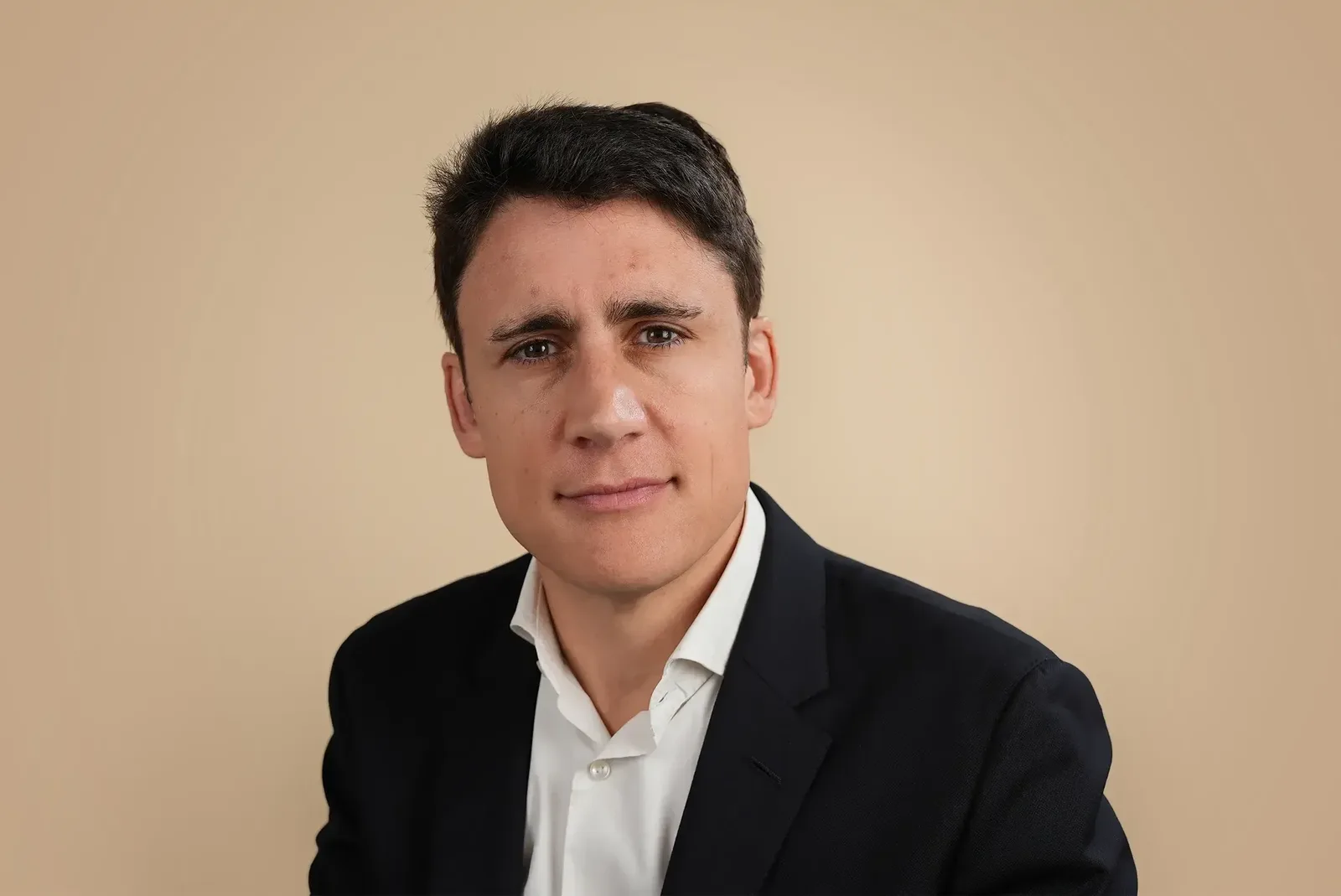
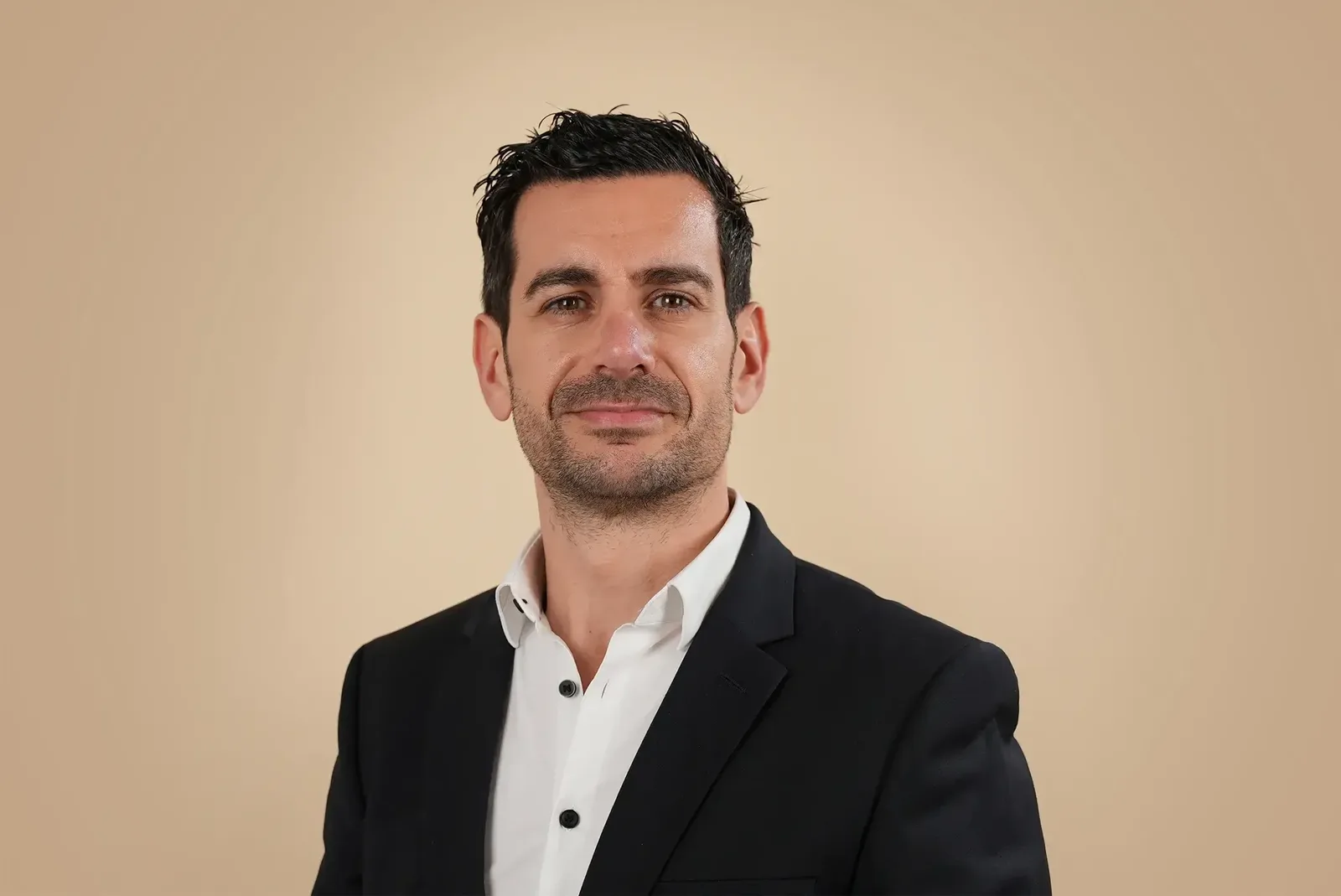
The plastic surgery team at Clínica EGOS is led by Dr Santiago Elvira i Barberà, plastic surgeon (registration no. 49756), co-founder of the clinic, with experience in breast cancer and reconstructive surgery. He is the reference surgeon for this page and signs and reviews this content. Our Barcelona team also includes Tiago Gomes (no. 44844), who has published on the role of the plastic surgeon in a breast unit.
Dr Elvira holds a degree from the Universitat de Barcelona and completed his specialty training (MIR) between Seville and Barcelona; Dr Gomes is a member of SECPRE and trained as a specialist at Bellvitge. The consultation days of each one at each clinic are given to you when you book.
Where we are in Barcelona
To book, call +34 932 71 80 69 or write to info@clinicaegos.com; it is the same phone number for all the clinics. The addresses, with the nearest metro or train, are these.
Balmes
Carrer de Balmes, 268 (08006), in Sant Gervasi - Galvany. On the page of our cosmetic surgery clinic in Barcelona you will find more details about this clinic. Two FGC stations, Plaça Molina and Sant Gervasi, are about a hundred metres away; Fontana (metro line 3) is further off, at four hundred.
Aribau
Carrer d'Aribau, 192 (08036), in the Eixample. About five hundred metres away on foot you have Provença (FGC) and Diagonal (metro lines 3 and 5).
Guinardó
Carrer de Sardenya, 515 (08024). Alfons X, on metro line 4, is about two hundred and fifty metres away, and Joanic, on the same line, about five hundred.
Madrazo
Carrer dels Madrazo, 60-66 (08006), in Sant Gervasi. Between Sant Gervasi, Plaça Molina and Muntaner (all three on FGC) the distance is 250 to 350 metres.
Poblenou
Avinguda Diagonal, 141 (08018), in Sant Martí. Poblenou station, on metro line 4, is about five hundred metres away.
Quote for breast augmentation in Barcelona: what it should include
The amount varies from one patient to another: it is set by the complexity, the technique, the implant and each patient's needs. That is why we explain it after the assessment, once we know which technique suits you.
The sensible thing is a written document that itemises fees, operating theatre, anaesthesia, implants, check-ups and post-operative materials (the bra, for example). Ask what happens if an extra check-up or an implant replacement is needed.
Sources for this page
See the sources: the SECPRE decalogue on breast augmentation with implants (January 2014), the ASPS pages on breast augmentation and the Spanish patient autonomy law (Law 41/2002), in the BOE. The profiles of the surgeons and of each clinic are on clinicaegos.com.
Content reviewed by Dr Santiago Elvira i Barberà, plastic surgeon (registration no. 49756) · October 2026
Book your breast augmentation in Barcelona
If you are thinking about breast augmentation in Barcelona, start with an assessment with one of our surgeons: we will look at your case and tell you which options fit and which do not. You can book by calling +34 932 71 80 69 or filling in the form on this page.
Informative text about breast augmentation. It is not a diagnosis and does not replace the assessment of a healthcare professional, and the result of the operation varies from one patient to another. Clínica EGOS.
Where we treat you
Clínica EGOS Barcelona Guinardó
Carrer de Sardenya, 515, 08024 Barcelona
Clínica EGOS Barcelona Madrazo
Carrer dels Madrazo, 60-66, Sarrià-Sant Gervasi, 08006 Barcelona
Clínica EGOS Barcelona Poblenou
Av. Diagonal, 141, Sant Martí, 08018 Barcelona
Frequently asked questions
Can an asymmetry between the two breasts be corrected?
Yes, it is one of the reasons people consult. A different implant can be used on each side or techniques can be combined; the surgeon proposes it after measuring both breasts.
Are a breast operation, mammoplasty and breast augmentation the same thing?
They are names for the same operation when the aim is to gain volume. If the aim is to lift the breast, it is called mastopexy; if it is to reduce it, reduction mammoplasty.
Can the breast be enlarged with your own fat alone?
In some cases, for moderate changes and if there are donor areas. Implants allow a bigger and more measured change.
Can I travel by plane after the operation?
Ask the surgeon before booking flights: how long it is advisable to wait depends on the technique and on how you progress. If you are coming from another city, say so at the first visit so that the check-ups can be organised.
How much does breast augmentation cost in Barcelona?
Before the assessment we do not give figures, because the cost changes with the technique and the implant; afterwards you receive a written quote with what it includes.
Where do I book my first visit?
By calling the main number (+34 932 71 80 69) or using the form on this page. When you book, we tell you at which of our Barcelona clinics the assessment takes place and on what day.
No obligation
Book your appointment and take the first step
Book a personalised assessment with our team of surgeons. We answer all your questions and design a plan tailored to you, with full transparency.