
on Google
Facial Surgery · Barcelona
Rhinoplasty in Barcelona
Rhinoplasty in Barcelona prompts many enquiries, almost always with the same questions: what can be changed and what cannot, which technique is used, what recovery is like and when the result shows. At Clínica EGOS we approach rhinoplasty as a medical and personal decision that starts with listening to you: what bothers you about your nose and what you expect, not a photo of someone else. We see patients at five clinics in the city (Balmes, Aribau, Guinardó, Madrazo and Poblenou) and have registered plastic surgeons.

Here you will find what rhinoplasty is, what types there are, what ultrasonic rhinoplasty offers, what is assessed at the first consultation, how the process works week by week and what a quote should include, so that you go to your consultation with your ideas in order.
What is rhinoplasty and who is it suitable for?
Rhinoplasty is surgery that changes the shape of the nose (the bridge, the tip, the width, the profile) and, when needed, also improves how it works for breathing. It is a delicate operation: the nose sits in the centre of the face, and a change of a few millimetres is noticeable. That is why it is not decided from a template, but from a study of your whole face.
People consider rhinoplasty for very different reasons. Some want to change the look of their profile or tip, some live with the after-effects of a blow, and some breathe badly because of a deviated septum. None is worth more than another: what matters is that the decision is yours and that you make it with information and without rushing.
In general, rhinoplasty is considered for adults in good health whose nose has finished developing. If anything advises against it, the surgeon looks into it with you at the first consultation.
According to the American Society of Plastic Surgeons (ASPS), it is best if facial growth has finished, the person is healthy and does not smoke, and has realistic goals: it is a very personal surgery, done for yourself and not to fit someone else's ideal.
Why have your rhinoplasty in Barcelona at Clínica EGOS
If you are looking for a rhinoplasty clinic in Barcelona, this is what we offer, and all of it can be checked:
Our own team at every stage
Our own medical team accompanies you at every stage: assessment, plan, surgery and check-ups.
Five clinics in Barcelona
The first assessment takes place at one of our five clinics in Barcelona (Balmes, Aribau, Guinardó, Madrazo and Poblenou); when you book, we tell you which one.
Registered plastic surgeons, with a public profile
The surgeons who perform rhinoplasty are registered plastic surgeons, and their profile is on our website with their medical registration number. We introduce them below.
First, the assessment
Then comes a written plan with the technique and the quote; after that, the operation and the check-ups. The assessment does not commit you to surgery.
What is the first rhinoplasty consultation in Barcelona like?
At the first visit you talk to a plastic surgeon. They will ask what you would like to change, what you do not want to lose and how long you have been thinking about it. Then they take your medical history and examine the nose from outside and inside.
The examination assesses the bridge, the tip, the width of the base, the thickness of the skin and its elasticity, the state of the cartilage and the septum, how open the nasal passages are, and how the nose relates to the chin, the forehead and the rest of the face. This overall study is what makes it possible to say which changes are possible and which are not. If you breathe badly, say when and on which side: function matters as much as shape.
Bring photographs of your nose from the front and in profile, if you have them, and tell the surgeon if you have had surgery before, if you have had blows to the nose or if you take any medication. Also the specific reason for the visit: wanting to refine the tip is not the same as correcting a deviation that makes breathing difficult.
The ASPS points out that, besides talking about your goals and your health, the surgeon usually takes measurements and photographs of the face in order to plan. It is normal for the first visit to include more questions from you than closed answers from the team: it is the moment to put your doubts on the table.
We give you the informed consent in writing before the operation: it explains the procedure and the alternatives. Spanish Law 41/2002 (art. 8) requires it to be in writing for an operation, and you can withdraw it, also in writing, whenever you wish. Read it without hurry and ask about anything you do not understand before signing it.
All surgery carries risks, and the surgeon explains those of your case before you decide. No result can be promised: it depends on each nose and on how each person heals.
Types of rhinoplasty: open, closed, functional, ultrasonic, preservation and secondary
There is not just one rhinoplasty. There are several ways in, several ways of working the bone and cartilage, and cases that are approached differently, such as a nose that has already been operated on before. These are the ones mentioned most often at consultations.
Open rhinoplasty
A small incision is made in the columella, the part that joins the tip to the base of the nose, and the skin is lifted to see the whole structure. It is considered when the tip needs precise work or when more complex deformities have to be corrected. The scar sits on the columella and how it looks depends on how each person heals.
Closed rhinoplasty
The incisions are internal, inside the nostrils, and there is no visible external scar. It is an option when the changes are more limited and access from inside is enough.
Functional rhinoplasty and septoplasty
If you have a deviated septum, rhinoplasty can be combined with a septoplasty to improve breathing at the same time as the look of the nose is worked on. Tell the surgeon even if your main reason is cosmetic: shape and function are planned together. For some people the only reason is to breathe better; in that case it is called functional rhinoplasty.
Ultrasonic or piezoelectric rhinoplasty
It is the same surgery with one difference in how the bone is worked: instead of a chisel and mallet, the surgeon uses a piezoelectric instrument, which emits high-frequency ultrasound vibrations, to sculpt the nasal bones. It is mainly applied to the bony part of the nose, for example to remove a hump or narrow a bridge that is too wide. The tip and the cartilage are still worked with the usual techniques. Further down we go over what the evidence says.
Preservation rhinoplasty
It is a way of approaching the bridge: instead of removing the hump and then rebuilding the line, the aim is to keep the structures of the bridge itself and reposition them to lower it. It does not suit every nose, and whether it is indicated depends on the shape of the bridge, the skin and what you want to change. If it interests you, ask the surgeon whether it is an option in your case.
Secondary or revision rhinoplasty
If you have already had nasal surgery and are not happy with it, secondary rhinoplasty exists. It is planned with more care because the starting structure has already been modified: cartilage may be missing, the skin may be tighter because of the scar, and what was done the first time has to be studied. Bring the report and photos of the previous operation, if you have them, and allow a reasonable time after the first surgery before considering another; how long is for the surgeon to decide.
What can be corrected depending on your nose
Every nose calls for a different solution. According to the ASPS, rhinoplasty can address the size of the nose in relation to the rest of the face, the width of the bridge or of the nostrils, a profile with a hump or with depressions, a tip that is wide, drooping, upturned or hooked, the nasal passages and asymmetry.
Hump and bridge
The hump is the prominence in the profile. It is lowered and the bridge is reshaped so that the line from the forehead to the tip is continuous. If the bridge is wide, it is narrowed by working the nasal bones. It is the area where the difference between techniques is most noticeable.
Drooping, wide or poorly defined tip
The tip depends on the cartilage. It is refined, lifted or projected depending on the case, without losing the support it needs for good breathing. A tip that drops when you smile or speak is studied with the nose in motion, not only at rest.
Wide or deviated nose
A wide nose can be wide because of the bone, the cartilage or the nostrils. A crooked nose usually involves the septum too, which is why the cosmetic correction is often combined with the functional one.
Rhinoplasty in men
A man's nose and a woman's nose are not approached in the same way. In general the aim is to keep a straighter, firmer bridge, avoid a tip that is too upturned and respect the proportion with a face of more marked features. As in every case, what decides is the study of your face, not a general rule.
What does the evidence say about the ultrasonic technique?
The ultrasonic technique is not a promise of results, and it is worth knowing what has been studied. According to a systematic review and meta-analysis published in 2024 in the Journal of Clinical Medicine, which pooled 12 randomised trials, cutting the bone with a piezoelectric instrument was associated with less swelling (oedema) on days 2 and 7 and less bruising (ecchymosis) on days 2, 4 and 7 than conventional osteotomy. The authors themselves consider the quality of the evidence to be low, and swelling and bruising were assessed subjectively.
Put another way: there are signs that the first few days may be easier, but there is no guarantee that they will be in your case, and the final shape of the nose does not depend on the instrument but on the plan and on the surgeon's hand. At the consultation we explain whether the ultrasonic technique makes sense for what you need.
Planning your rhinoplasty in Barcelona: how the shape of your nose is decided
The result is not improvised in the operating theatre: it is planned beforehand. From the measurements and photographs, the surgeon decides which bone and cartilage are changed, by how much, and what is left alone. Changing a lot is not the same as doing it better: a harmonious nose is one that fits with the rest of your face.
To help you picture possible changes, the surgeon may use digital simulations at the consultation. They are a guide for talking about shape and proportion, not a promise of how it will turn out: it varies with each anatomy and each person's healing.
Tip: bring photos of noses you like and, above all, clarity about what you reject. It is more useful than asking for "the nose of" someone, because it lets the surgeon understand what you are after within what your face allows.
The day of the operation: anaesthesia, duration and centre
Surgery takes place in an operating theatre, and the type of anaesthesia is decided by the medical team according to your case. How long the operation lasts depends on the complexity: the more the tip, the septum or the cartilage is worked on, the longer it takes. The team tells you in advance.
Before setting the date we tell you which centre you will be operated in and who looks after you there if a question comes up outside opening hours.
According to the ASPS, you will be asked to prepare beforehand, which may include blood tests, adjusting medication, giving up smoking and avoiding the medicines and herbal supplements that increase bleeding, and it is advisable to have someone drive you and stay with you the first night. Your team specifies what applies to you.
After a rhinoplasty: from the first week to the final result
Before the operation
Before the date you will have the plan, the quote and the informed consent form in writing, together with the instructions for the days beforehand. It is the moment to settle any questions you have left.
The first few days
A splint is placed on the nose at the end, and according to the ASPS there may also be internal packing and dressings. You are advised to sleep on your back with your head raised for the first few days, and to avoid blowing your nose hard. The discomfort of the first few days is treated with the regimen the team gives you.
The first week and the first month
The splint is usually removed towards the end of the first week. Strenuous effort and sport wait a little longer, following the surgeon's guidelines; it is also advisable to avoid glasses that rest on the nose for several weeks.
The following months
The swelling goes down gradually. According to the ASPS, the initial swelling subsides in a few weeks, but the nose can take up to a year to reach its final shape, with swelling that comes and goes during that time and is usually worse in the morning.
Final result and follow-up
Changes are seen early, but the final result is refined over months. Check-ups are scheduled to monitor progress, and it is normal to keep noticing small changes throughout the first year. Ask who will carry out the check-ups and how many are planned.
When is it better to wait or consider another option?
Sometimes the prudent thing is not to operate yet. It may be better to wait if the nose is still developing, if there is a recent injury that needs time to settle, or if what you expect is not achievable in your case.
And if what you want is a small touch-up, such as lifting the tip or disguising an unevenness, there are touch-ups that correct only minor defects and whose effects are not permanent; the surgeon will tell you whether they fit your case. They do not change the bony structure or solve breathing problems.
Whether now is the right time for your rhinoplasty in Barcelona is decided at the in-person assessment.
Surgeons for your rhinoplasty in Barcelona: the Clínica EGOS team
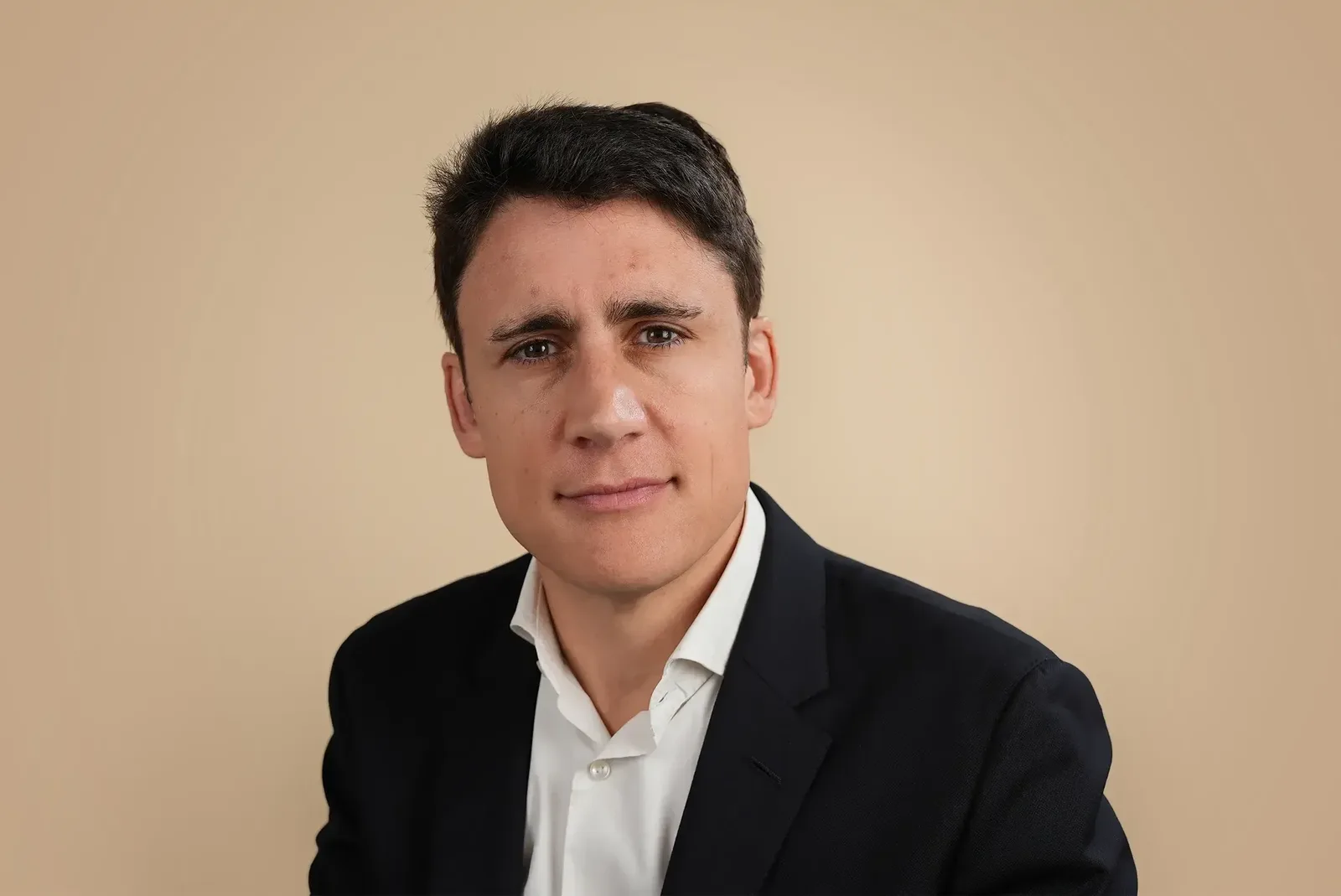
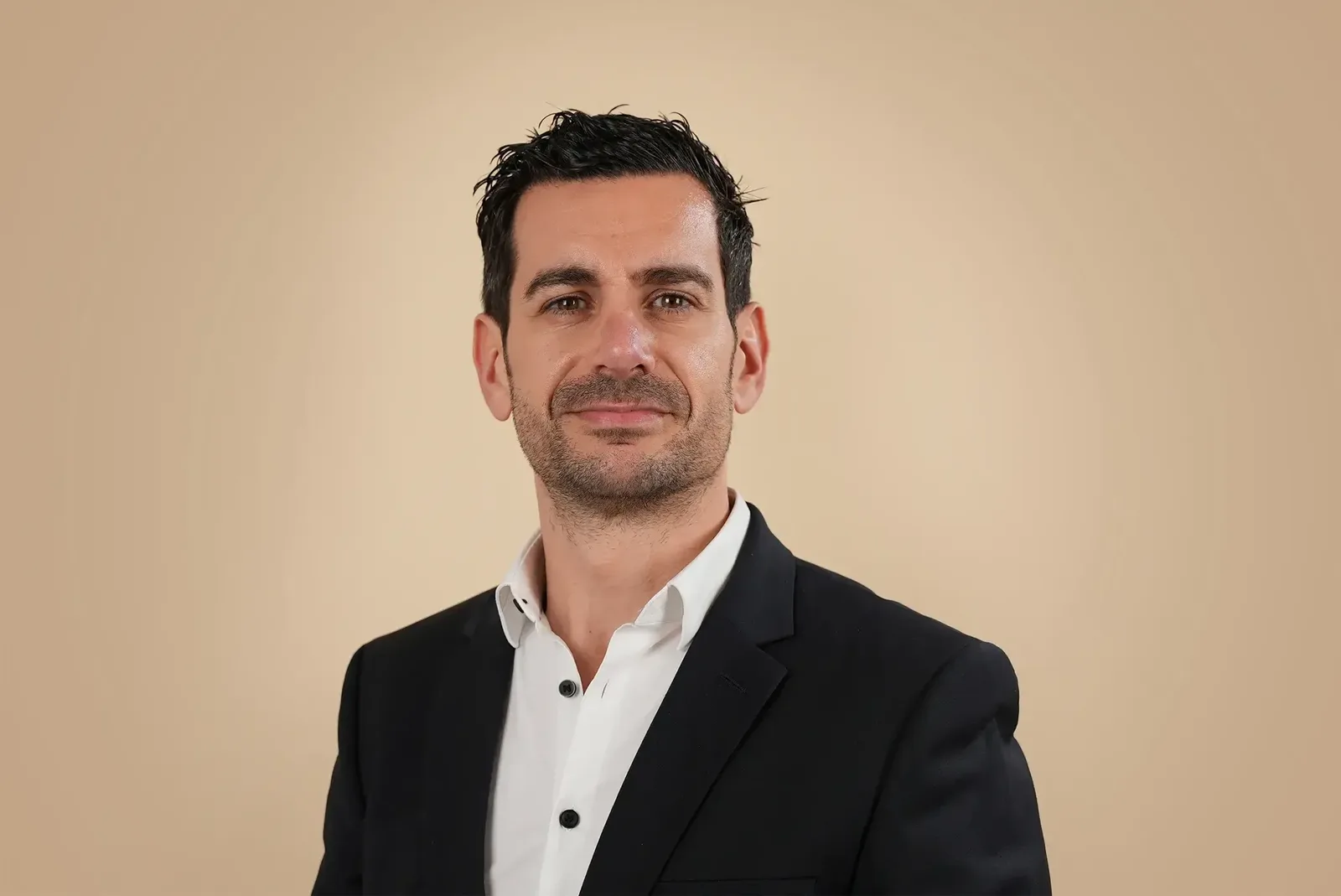
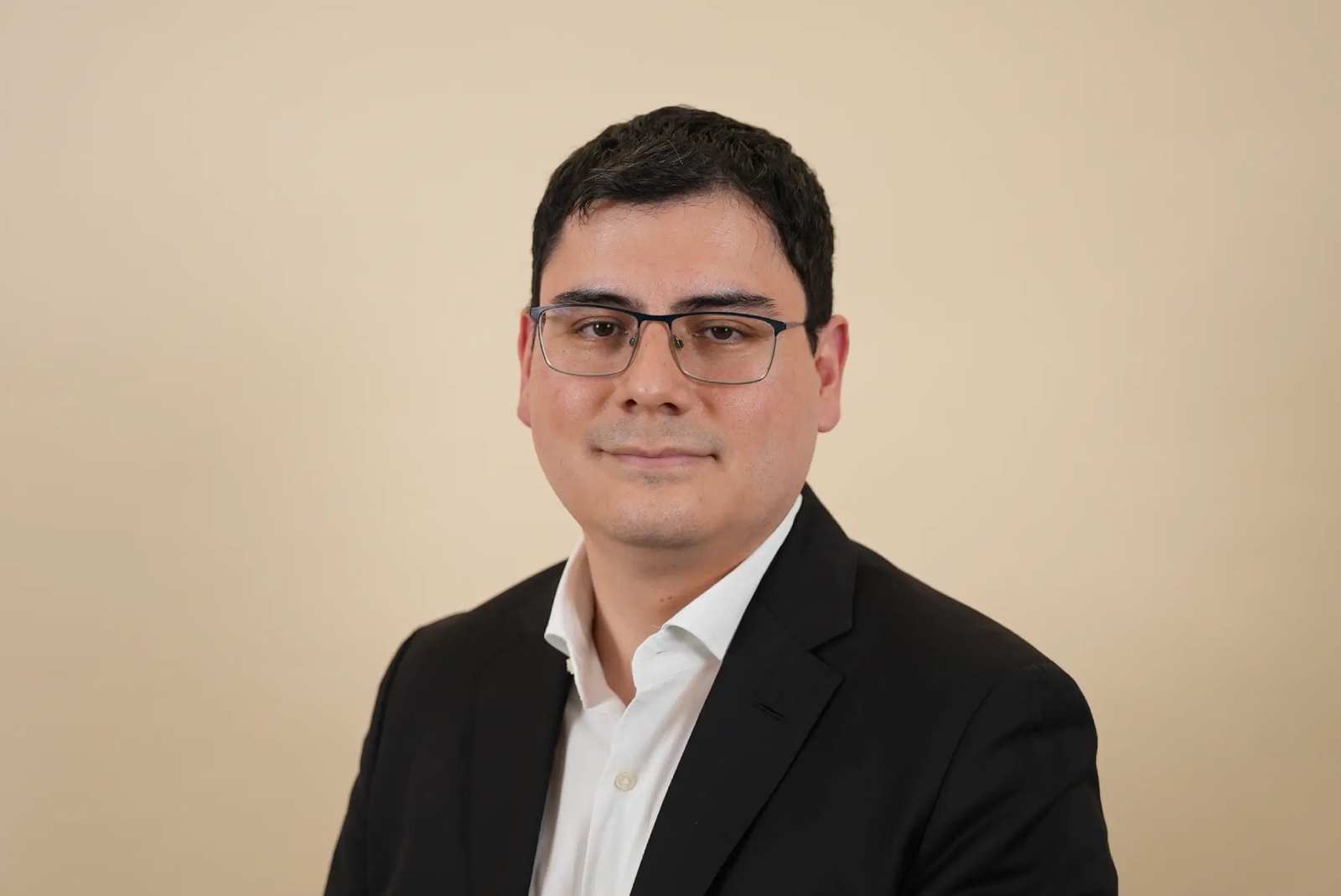
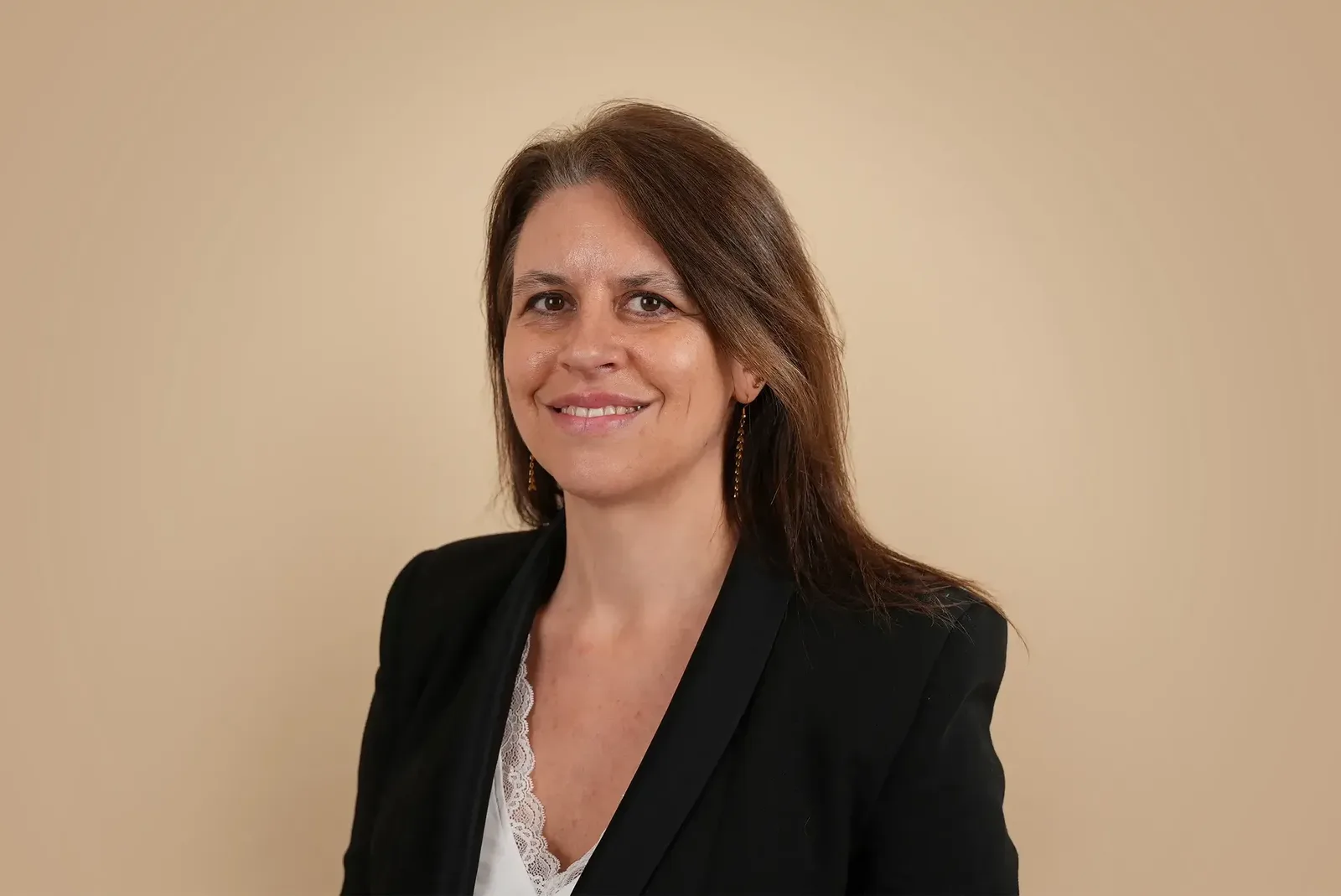
The plastic surgery team at Clínica EGOS in Barcelona is led by Dr Santiago Elvira i Barberà, the reference surgeon for this page, who signs and reviews this content. These are the plastic surgeons on our team in Barcelona who work in rhinoplasty. Each one's public profile shows their registration number.
Dr Santiago Elvira i Barberà (registration no. 49756)
Specialist in Plastic, Reconstructive and Aesthetic Surgery. After studying Medicine at the Universitat de Barcelona, he did his residency (MIR system) in Seville and Barcelona, with stays abroad. He is co-founder of Clínica EGOS.
Dr Tiago Gomes (registration no. 44844)
A graduate in Medicine from the University of Lleida, he did his specialty training in Plastic, Aesthetic and Reconstructive Surgery at the Hospital Universitari de Bellvitge. He is a member of the SECPRE and of the Spanish Association of Microsurgery, and an author and co-author of medical publications.
Dr Edgar Carmona (registration no. 57800)
He did his specialty training through the MIR system in Seville and rotated through hospitals such as Hospital La Paz, Bellvitge and the Teknon Medical Centre. He is a member of the SECPRE. Besides his interest in reconstructive surgery and microsurgery, he has trained in aesthetic surgery, where rhinoplasty stands out.
Dr Lorena Vives (registration no. 38736)
Graduate of the Universitat de Barcelona and specialist through the MIR system at the Hospital de la Santa Creu i Sant Pau. She set up the Plastic Surgery Department of the Hospital Creu Roja-Dos de Maig and headed that of Sant Joan Despí-Moisès Broggi for more than ten years.
You can check the registration of any of them with their medical association and, at the consultation, ask for the health registration number of the centre where you will be operated on.
Clínica EGOS clinics in Barcelona: addresses and how to get there
Our five clinics in Barcelona share a telephone number, +34 932 71 80 69, and an email, info@clinicaegos.com; the day and clinic where each surgeon sees patients are confirmed when you book.
Balmes (Carrer de Balmes, 268, 08006)
In the Sant Gervasi - Galvany neighbourhood. On the page of our cosmetic surgery clinic in Barcelona you will find more details about this clinic. The Plaça Molina and Sant Gervasi stations, on FGC, are about 100 metres away, and Fontana (metro line 3), about 400.
Aribau (Carrer d'Aribau, 192, 08036)
In the Eixample. Provença (FGC) and Diagonal, with metro lines 3 and 5, are about 500 metres away.
Guinardó (Carrer de Sardenya, 515, 08024)
Alfons X station (metro line 4) is about 250 metres away, and Joanic, on the same line, about 500.
Madrazo (Carrer dels Madrazo, 60-66, 08006)
In Sant Gervasi. The Sant Gervasi and Plaça Molina (FGC) stations are about 250-300 metres away, and Muntaner (FGC), about 350.
Poblenou (Avinguda Diagonal, 141, 08018)
In the Sant Martí district. Poblenou station (metro line 4) is about 500 metres away.
What to ask at a rhinoplasty consultation
Write them down before you go; these are the ones that help most: which changes are possible in your nose and which are not; open or closed technique, and why; whether the ultrasonic technique makes sense in your case; whether the septum will need work to help you breathe better; what recovery will be like in your day-to-day and what anaesthesia will be used, with or without an overnight stay; how many check-ups there will be and who will carry them out; and what the quote includes and what it does not.
What does the quote for a rhinoplasty in Barcelona include?
The cost of a rhinoplasty is not the same for everyone. It is set by the complexity of the operation, whether only the nose is worked on or also the septum, the technique and what each case needs. That is why we do not give a figure before seeing you: the quote comes after the assessment, once it is clear what needs to be done.
Ask for it in writing and itemised: the team's fees, operating theatre, anaesthesia, materials, check-ups and follow-up care. If something does not appear, ask whether it is included.
Sources for this page
The sources are the ASPS pages on rhinoplasty, the piezosurgery meta-analysis published in the Journal of Clinical Medicine (2024;13(13):3635) and, in the Spanish official gazette (BOE), Law 41/2002 together with Royal Decree 1030/2006. The profiles of the four surgeons and of each clinic are on clinicaegos.com.
Content reviewed by Dr Santiago Elvira i Barberà, plastic surgeon (registration no. 49756) · October 2026
Book your first rhinoplasty consultation in Barcelona
Want to know what can be done with your nose? Book a first assessment with one of our surgeons in Barcelona: we will tell you which options suit you and which do not. Call +34 932 71 80 69 or request an appointment from this page, with no commitment.
This page gives information about rhinoplasty and does not replace a medical consultation: each nose is assessed individually and no result is guaranteed. Clínica EGOS.
Where we treat you
Clínica EGOS Barcelona Guinardó
Carrer de Sardenya, 515, 08024 Barcelona
Clínica EGOS Barcelona Madrazo
Carrer dels Madrazo, 60-66, Sarrià-Sant Gervasi, 08006 Barcelona
Clínica EGOS Barcelona Poblenou
Av. Diagonal, 141, Sant Martí, 08018 Barcelona
Frequently asked questions
How long does recovery take after a rhinoplasty?
It varies with the person and the technique. There are a few days of rest at first with the splint on; daily activity returns gradually and sport comes later. The swelling goes down over weeks and the final shape arrives over the months.
When can I go back to work after a rhinoplasty?
It depends on your job: if you deal with the public, you may prefer to wait until the swelling has gone down further even though you could already go back. The surgeon gives you an approximate date and adjusts it at each check-up.
When is the nasal splint removed?
Normally towards the end of the first week. The surgeon sets the day at the relevant check-up.
When can I play sport and wear glasses?
Strenuous exercise comes back later than everyday activities, and gradually, as the surgeon indicates. It is best to avoid glasses that rest on the nose for several weeks; if you need them, there are light models that attach at the forehead.
When is the final result of a rhinoplasty visible?
The first changes are seen once the initial swelling goes down, but the final result can take up to a year, because the residual swelling disappears little by little.
Does rhinoplasty leave scars?
With the closed technique the incisions are inside the nose and there are no external marks. With the open technique a small scar is left on the columella, and how it looks depends on how each person heals. The surgeon explains at the consultation which route is right in your case.
Is the result of a rhinoplasty permanent?
Changes made to the bone and cartilage are definitive, but the nose, like the rest of the face, keeps changing over the years. That is why good planning beforehand matters.
How much does a rhinoplasty in Barcelona cost?
We do not give a fixed figure in advance: the cost changes with the complexity of the surgery and is detailed in writing after the assessment, with what it includes.
Where do I book my first rhinoplasty consultation in Barcelona?
By calling the main number (+34 932 71 80 69) or using the form on this page. When you book, we tell you at which of our Barcelona clinics the assessment takes place and on what day.
Does a rhinoplasty hurt?
During the operation you feel no pain, because it is done under anaesthesia. Afterwards there is discomfort, mainly pressure and congestion from the swelling and the splint, which is controlled with the medication the team prescribes for you. Each person experiences it differently.
At what age can the nose be operated on?
When the nose has finished growing and the person is in good health; the specific age is decided by the surgeon at the consultation.
What anaesthesia is used in a rhinoplasty?
The medical team and the anaesthetist decide it according to your case and your health. They explain it to you at the pre-operative consultation and you sign for it as part of the consent.
How long does nose surgery take?
It depends on what needs correcting: a tip and a bridge take less time than a complete correction that includes the septum. The surgeon gives you an estimate for your case.
Can I travel by plane after a rhinoplasty?
Ask before booking tickets: the surgeon will tell you how long it is advisable to wait depending on the technique and the swelling you have. If you are coming from another city or another country, say so at the first consultation so that the check-ups can be planned.
Does Spanish Social Security cover rhinoplasty?
Royal Decree 1030/2006, which sets out the portfolio of common services of the Spanish National Health System, excludes whatever has aesthetic improvement as its purpose and whatever is unrelated to an illness, an accident or a congenital malformation. If your problem is mainly respiratory or comes from an injury, discuss it with your doctor in the public system.
No obligation
Book your appointment and take the first step
Book a personalised assessment with our team of surgeons. We answer all your questions and design a plan tailored to you, with full transparency.