Abdominoplasty scar: care and real situations


Abdominoplasty: Tummy tuck
Read more about AbdominoplastyAbdominoplasty scar: care and real-world situations
If you’re thinking about having an abdominoplasty, one of the first questions that comes up is the scar. In abdominoplasty, this is one of the main concerns before abdominal surgery.
What will it look like? Where will it be? Will it become less noticeable over time? In this article, we explain what an abdominoplasty scar is like, how a real abdominoplasty scar evolves month by month, the medical aftercare that helps improve it, and what results you can expect long term. Understanding that the scar is the “price” for achieving a flat, firm abdomen is essential; however, with refined surgical technique and the patient’s commitment during the postoperative period, this mark can become almost imperceptible.
What is an abdominoplasty scar like?
The scar depends on the type of surgery and how much skin is removed. In all cases, the goal is for it to be discreet, low, and easy to conceal. The final quality depends not only on the surgeon’s technique, but also on each patient’s genetics and healing capacity. Below are the most common variations.
Full abdominoplasty scar:
It is a horizontal scar located in the lower abdomen, from hip to hip. It is strategically placed so it can be hidden by underwear or a bikini. Because this surgery corrects laxity across the entire abdomen, it usually also involves a small scar around the navel, since it must be repositioned in its new location. Although it is the longest incision, it allows muscle tightening and the removal of a greater amount of excess skin.
Mini abdominoplasty scar:
Shorter and localized in the lower abdomen. This incision is characteristic of mini abdominoplasty, indicated when laxity is mild and does not require repositioning the navel. It is very similar to a C-section scar, although somewhat longer, and it usually has a faster aesthetic recovery because there is less tension in the tissues. It is the ideal option for patients who only have a small amount of excess skin below the navel.
Anchor scar (specific cases):
In very specific situations (severe excess skin or previous surgeries), a vertical scar may be added. Nowadays it is avoided whenever possible, and it is reserved almost exclusively for patients who have experienced massive weight loss (post-bariatric) and have excess tissue both vertically and horizontally. Although it is more visible, it allows a complete reshaping of the silhouette when other techniques would not be sufficient.
How to improve an abdominoplasty scar
There are essential medical guidelines to improve an abdominoplasty scar and make it as imperceptible as possible:
- Massage and early care
They promote elasticity and prevent adhesions. Manual lymphatic drainage and specific scar massages (once the wound is closed and the doctor authorizes it) help “break up” internal fibrosis, making the tissue flatter, softer, and more flexible, and preventing that bulging appearance or a hard, cord-like feel to the touch.
- Use of silicone sheets
One of the most effective treatments to improve texture and color. These sheets or patches create an occlusive environment that keeps the skin hydrated and regulates collagen production. Continuous use during the first months is the gold standard for preventing hypertrophic scars or keloids.
- Repairing creams
Recommended by the surgeon depending on skin type. They often contain ingredients such as rosehip oil, vitamin E, or centella asiatica, which deeply nourish the skin and speed up cell regeneration. It is vital to apply them only when the wound is completely closed to avoid infections or maceration of the wound edges.
- Medical-aesthetic treatments
Laser, radiofrequency, or injections can improve persistent scars. If, after the maturation period, the scar remains red or raised, fractional CO2 laser or vascular laser can help even out tone and texture, blending the mark with the surrounding healthy skin.
Medical advice for good healing
Avoid sun exposure for 6–12 months
The sun can permanently darken the scar.
UV rays activate melanin in scar tissue, which is very sensitive, causing hyperpigmentation (a dark spot) that is very difficult to remove later. If exposure is unavoidable, use full sun protection (SPF 50+) or physically cover the area.
Do not smoke before and after surgery
Smoking worsens scar quality. Nicotine causes vasoconstriction, which drastically reduces the flow of blood and oxygen to the wound. This not only increases the risk of a wide, poor-quality scar, but also dangerously raises the risk of necrosis (tissue death) and dehiscence (wound opening).
Monitor nutrition and hydration
A protein-rich diet and good hydration support healing. Tissues need “building blocks” to rebuild; adequate intake of protein, vitamin C, and zinc is essential for the synthesis of new, strong collagen.
Correct use of the compression garment
It reduces tension on the wound and improves the final result. The compression garment not only shapes, but also supports the tissues, preventing gravity or sudden movements from pulling on the wound edges, which is the main reason a scar widens during the first weeks.
Is an abdominoplasty scar permanent?
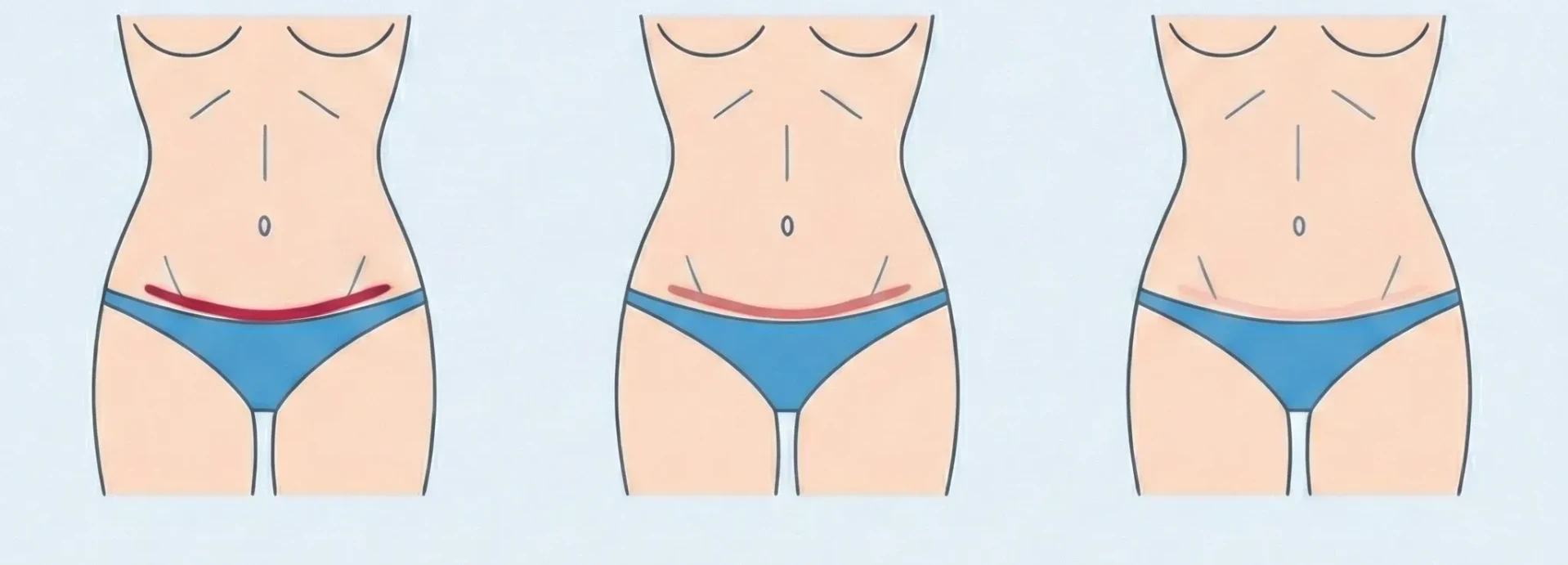
How it changes over the years. It remains, but becomes increasingly discreet and lighter. The scar maturation process lasts between 12 and 18 months. At first it will be red and visible (immature phase), but over time it fades into a fine pearly or white line, similar to a stretch mark, that goes unnoticed at a glance.
When to consult the surgeon
If you notice thickening, persistent pain, or striking color changes. It is important to watch for the scar starting to grow beyond its borders (keloid) or becoming very thick and raised (hypertrophic) in order to start treatment with corticosteroids or pressure patches as early as possible.
Frequently Asked Questions
Does the scar hurt?
Does the scar hurt?
There may be some tenderness for the first few months, but not chronic pain. It is normal to feel tightness, tingling, or numbness (paresthesia) during recovery; these sensations will subside as the superficial nerve endings regenerate.
How can we prevent it from widening?
How can we prevent it from widening?
Following medical advice and avoiding early strain is crucial. Avoiding abdominal strain, lifting heavy objects, and maintaining a slightly flexed posture while walking for the first few days are key measures to ensure the scar remains thread-thin.
What happens if it turns out too red?
What happens if it turns out too red?
It usually resolves on its own; if it persists, there are specific treatments available. The red color indicates that the scar is active and vascularized. If this color does not disappear after the first year, vascular laser treatment is an excellent option to close these capillaries and lighten the area.
Can an old scar be treated?
Can an old scar be treated?
Yes, with advanced medical-aesthetic techniques. Even years after surgery, it is possible to improve the appearance of a scar through dermabrasion, micropigmentation (to match the color), or, in selected cases, minor scar revision surgery ("touching up" the scar).
Can it be hidden with underwear or a bikini?
Can it be hidden with underwear or a bikini?
Yes. In the vast majority of cases, the abdominoplasty scar is completely covered, even by small garments. During preoperative planning, the surgeon draws the incision lines based on the patient's anatomy and often uses their usual underwear as a reference to ensure the scar remains within the aesthetically acceptable "safe zone."