on Google
Body Surgery · Málaga
Abdominoplasty in Málaga
Abdominoplasty (tummy tuck) in Málaga is the operation that removes excess skin from the abdomen and, when needed, brings together muscles that have separated, which is common after pregnancy or major weight loss. Here we explain what it is and what it is not, which types there are, who it is considered for, how the operation and recovery go, what scar is left and what the quote should include.

We see patients at 5 Rachmaninov Street, close to the centre of Málaga, and the first visit is there to assess your case with no obligation to have the operation.
What is abdominoplasty and what is it not?
Abdominoplasty is the surgery that removes excess skin and fat from the abdomen and, in most cases, repairs weakened or separated muscles to leave a flatter, firmer profile. This is how the American Society of Plastic Surgeons (ASPS) describes it on its website, as consulted in October 2026, adding that even people of normal weight and proportions can have an abdomen that protrudes or hangs.
What it is not matters as much as what it is: according to the ASPS, abdominoplasty is not a substitute for weight loss or an exercise programme. It is not meant for losing weight, so the question of how many kilos you lose makes little sense. What changes is the contour of the abdomen, not the number on the scale.
It does not correct stretch marks either. Those on the skin that is removed may disappear or improve somewhat; those outside that area stay where they were.
As for the passing of time, the ASPS considers the result lasting, although large changes in weight can spoil it. That is why the ASPS advises people who plan to lose a lot of weight or to have children later on to wait.
Types of abdominoplasty in Málaga: mini, full and with liposuction
Not every abdomen needs the same operation. The technique depends on what predominates: loose skin, localised fat or separation of the muscles.
Mini abdominoplasty
It works on the lower part of the abdomen. It is considered when there is little excess skin and the muscle separation, if there is any, is not extensive.
Full abdominoplasty
It works on the whole abdominal wall: the excess skin is removed, the muscles are tightened if they are separated and the navel is repositioned. It is considered when the loose skin or the diastasis recti is greater.
Abdominoplasty with liposuction
Liposuction is not an abdominoplasty, but the two techniques are compatible. If, besides excess skin, there is localised fat, the surgeon may suggest both in the same operation. Choosing between the mini and the full version, with or without liposuction, depends on the loose skin and the diastasis recti, and is decided at the consultation with your abdomen in front of us.
Who is abdominoplasty in Málaga for? After pregnancy, weight loss and diastasis recti
The ASPS sums up the candidate in four traits: being healthy and at a stable weight, having realistic expectations, not smoking and feeling uncomfortable with the look of the abdomen. And it points out something we share: you have surgery for yourself, not to fulfil someone else's wish.
After a pregnancy
It is one of the most common situations: the abdomen is left with excess skin and, sometimes, with separated muscles. It is best to have finished having children, because a later pregnancy can change the result.
After major weight loss
When the skin does not retract after losing weight and does not improve with diet or exercise, abdominoplasty is the way to remove it. Your weight should be stable before surgery.
Diastasis recti
Diastasis recti is the separation of the rectus muscles of the abdomen. If it is present, the operation can include stitching those muscles together to restore firmness to the abdominal wall; the surgeon checks this during the examination.
If you have had abdominal surgery before, mention it too: the ASPS lists previous surgeries among the causes of a protruding or loose abdomen, and they affect how the operation is planned.
Your first abdominoplasty consultation in Málaga
At the first visit your case is assessed and we listen to what you expect from the operation, in order to design a personalised plan. The surgeon explains the technique, the result you can expect and the quote. To make the most of it, bring anything that may be relevant: reports from previous operations, the medication you take and, if you are thinking about having children, say so from the start.
The abdomen is examined: how much skin is in excess, whether there is localised fat, whether the muscles are separated and what previous scars look like. With that information it is decided whether a mini or a full abdominoplasty fits, and whether it makes sense to add liposuction.
The consultation does not commit you to anything: you can leave with the plan and think it over for as long as you need.
Before you go, write down what you want to know about recovery: how long you will wear the compression garment, whether there will be drains and when they come out, when you can go back to work and exercise, what care and medication you will follow at home and when the check-ups are.
The operation step by step: anaesthesia, duration and rest
Abdominoplasty is performed under general anaesthesia and lasts roughly three hours, depending on the type of operation; afterwards there are two days of rest.
What the surgeon does
The usual sequence is this: a horizontal incision in the lower abdomen, at the level of the pubis, as long as the skin to be removed requires; removal of the excess skin and, if appropriate, of the localised fat; stitching of the muscles when they are weakened or separated; repositioning of the skin, which is pulled downwards and trimmed; and, if needed, placing the navel in its new position.
Before the date
To prepare for the operation, the tests that apply to your state of health are requested and you are given the instructions beforehand: stop smoking three weeks before and another three weeks after, wash with a germicidal soap and adjust any medication that interferes with blood clotting. You will sign a written informed consent form, as Law 41/2002 provides for any surgical procedure, and the surgeon will first explain the alternatives to you.
The scar of abdominoplasty: where it is and how it changes
It sits in the lower abdomen, similar to a caesarean scar although normally longer, and it can be covered by underwear or a swimsuit.
It fades over time. The scar improves gradually over the first year; at the check-ups, the surgeon follows how it is evolving. Aftercare, specific creams and medical follow-up help it heal well, but every skin evolves differently and a particular appearance cannot be guaranteed.
Recovery from abdominoplasty in stages
These are the general guidelines we give; the surgeon adjusts them to your case and gives them to you in writing.
The first two days
There are two days of rest after the operation. Dressings and an elastic bandage or a compression garment may be fitted to reduce swelling and support the abdomen while it heals. The ASPS adds that thin tubes are sometimes left temporarily under the skin to drain the fluid that builds up; the surgeon decides whether you need them.
From the first to the fourth week
Most people go back to work after two to three weeks, as long as the job does not involve physical effort. For the first four to six weeks, avoid bending, pulling or pushing hard. The compression garment is usually worn for four to eight weeks.
Up to three months
Normal life usually returns at around four to six weeks; physical effort, exercise and sport wait about three months, and the surgeon tells you when to resume them. The final result settles in afterwards.
Can it be combined with liposuction or a breast operation?
Yes. Abdominoplasty is not liposuction, but many people combine them when there is localised fat. Liposuction removes the fat, but the skin only contracts to a certain point; if excess skin remains, abdominoplasty is needed as well.
Sometimes a breast operation is added too. If you are considering both after a pregnancy, you can see what breast augmentation in Málaga involves. Combining several operations in one session lengthens the time in theatre and asks more of your recovery; the surgeon decides at the consultation whether to do them together or in stages.
Who performs abdominoplasty in Málaga?
You are seen by registered plastic surgeons from Clínica EGOS, who assess your abdomen and suggest the technique that suits you. The assessment and the operation are carried out by the same medical team.
Before you book a date, we tell you in writing who will operate on you, with their registration number with the medical association, and at which centre, with its health registration number.
With that registration number you can check the registration of the person operating on you with the medical association (colegio de médicos).
If you live outside Málaga
If you come from the Costa del Sol, Ronda or Antequera, when you ask for an appointment we tell you how many visits are needed before and after the operation and which of them can be done remotely. It is best to set the date with the travel in mind, because the first two days are for rest.
What the cost of abdominoplasty in Málaga depends on
A figure cannot be given without examining the abdomen, which is why it comes in writing after the consultation. It depends, above all, on whether the operation is mini or full, on whether the muscles need repairing, on whether it is combined with liposuction or other surgery, on the type of anaesthesia and on whether you need to stay overnight.
A complete quote itemises the assessment and the tests beforehand, the surgeon's fee and the anaesthetist's, the operating theatre and any overnight stay, the compression garment and the check-ups after the operation. We give it to you in writing, itemised.
Compare like with like: two quotes are only alike if they cover the same operation and the same items.
How to get there and book an appointment in Málaga
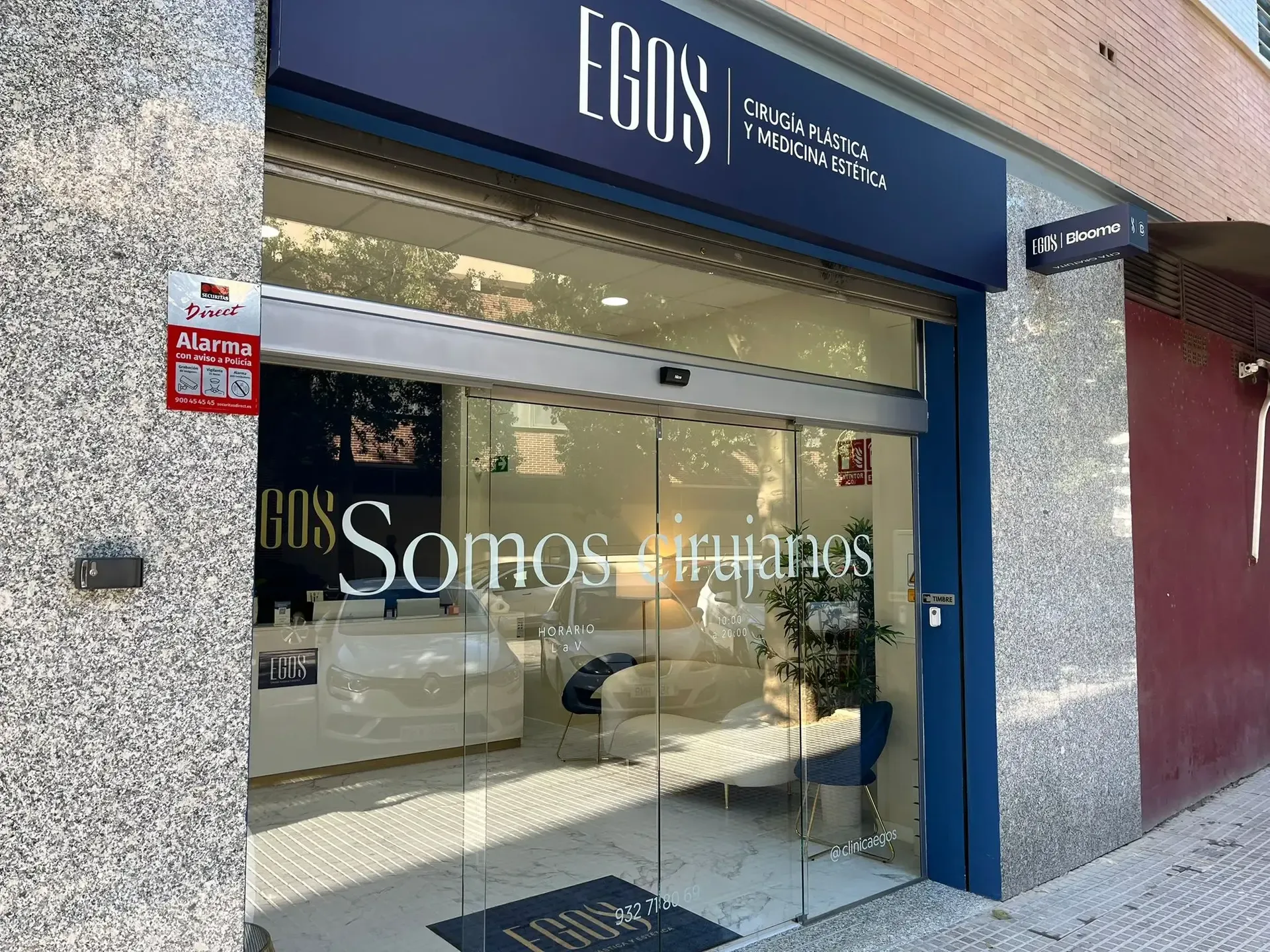
The plastic surgery clinic in Málaga is at number 5 Rachmaninov Street (29002). Opening hours are 10:00 to 20:00, Monday to Friday. A few minutes' walk away are the Guadalmedina and El Perchel metro stops, the Málaga Centro-Alameda commuter rail station and the María Zambrano train station.
Bookings by email (info@clinicaegos.com) or by phone (+34 682 14 15 14). The Google listing of the Málaga clinic has a rating of 4.9 from 95 reviews (14/10/2026).
Other cities where we see patients for abdominoplasty
If another clinic is closer to you, see Abdominoplasty in Barcelona and Abdominoplasty in Madrid.
In Málaga we also see patients for: Breast augmentation in Málaga.
Sources for this page
Sources: the ASPS pages on abdominoplasty (what it is, candidates and recovery) and Law 41/2002 from the Spanish Official State Gazette (BOE); read in October 2026.
Content reviewed by Dr Santiago Elvira i Barberà, plastic surgeon (registration no. 49756 with the medical association) · October 2026
For information only; it does not replace a consultation with a healthcare professional. The results of any procedure depend on each patient and are assessed individually. Clínica EGOS.
Where we treat you
Frequently asked questions
How much does an abdominoplasty cost in Málaga and what does the quote depend on?
The figure is given after the consultation, in writing and itemised, because it depends on the type of operation, on whether the muscles need repairing, on the anaesthesia and on whether liposuction is added. Two quotes can only be compared if they cover the same thing.
How many kilos do you lose with an abdominoplasty?
It is not measured in kilos: according to the ASPS, abdominoplasty is not for losing weight. It removes skin and fat from the abdomen to change its contour, and anyone who needs to lose weight should do so first.
What is the difference between a full abdominoplasty and a mini one?
The mini works on the lower abdomen and is considered when there is little excess skin; the full one works on the whole wall and can include stitching the muscles and repositioning the navel. It is decided according to the loose skin and the diastasis recti.
Can you have the operation with diastasis recti? And after a pregnancy?
Yes. Diastasis recti, or separation of the abdominal muscles, can be treated in the same operation. After a pregnancy it is best to have finished having children, because another pregnancy can change the result.
Who will operate on me and at which centre?
One of the clinic's registered plastic surgeons operates on you. Before the date is set, we tell you in writing their name and registration number with the medical association, and the centre with its health registration number.
What if I live outside Málaga? What does follow-up look like?
When you ask for an appointment, we tell you how many visits are needed before and after the operation and which of them can be done remotely.
What is the first consultation in Málaga like?
Your case is assessed, the abdomen is examined and the technique, the expected result and the quote are explained to you. It does not commit you to the operation.
No obligation
Book your appointment and take the first step
Book a personalised assessment with our team of surgeons. We answer all your questions and design a plan tailored to you, with full transparency.