on Google
Breast Surgery · Madrid
Breast lift in Madrid
A breast lift (mastopexy) in Madrid is the operation people consider when the breast has lost firmness and sits lower, but volume is not the main worry. It is also called breast lifting, and the doubts that come up are nearly always the same: what scar is left, whether an implant is needed, what happens with future breastfeeding and how long recovery takes to pass. At Clínica EGOS we approach it as a decision made in the consultation room with the surgeon in front of you, not from a catalogue of techniques.
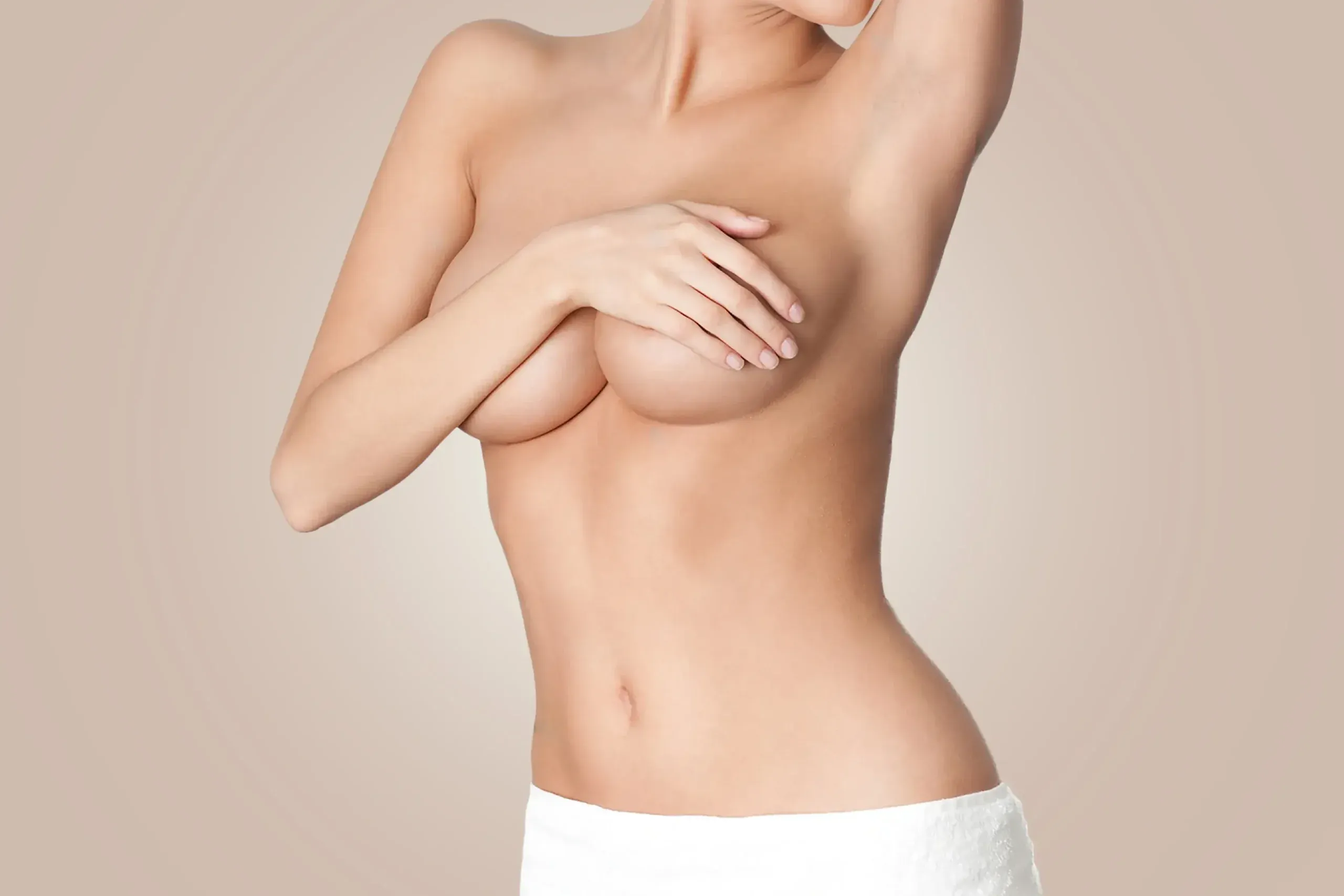
This page walks through the breast lift in Madrid from beginning to end: when it is indicated and when it is not, how one of the possible scars is chosen, what changes if an implant or your own fat is added, what the operating theatre is like, what to expect week by week and what a quote should include. We hold the first consultation at five sites in the Community of Madrid: Chamberí, Retiro, Castellana, Alcobendas and Móstoles.
What is a breast lift (mastopexy) and when is it indicated?
A breast lift is a plastic surgery operation that raises the breast: it removes excess skin, repositions and supports the breast tissue, and places the nipple and areola higher. Mastopexy, breast lift, breast lifting and lifting mammoplasty are different names for the same procedure. If the areola has widened over time, the operation can reduce it.
The American Society of Plastic Surgeons (ASPS), in its page on the breast lift (consulted in October 2026), explains that the breast changes in shape and firmness because of pregnancy, breastfeeding, weight changes, age, gravity and heredity. None of these causes is anyone's fault, and all of them can be talked through in the consultation.
The most important thing to know from the start is what a breast lift does not do. The ASPS points out that it does not significantly change the size of the breast or fill the upper part. If you are looking for more volume, combining it with an augmentation is discussed; if you want less, with a reduction. Which of the three suits you is decided by the examination, not by a size chosen in advance.
How far the breast has dropped
Surgeons classify the drop, called ptosis (sagging), according to where the nipple sits in relation to the fold under the breast (inframammary fold). In mild ptosis, the nipple is level with the fold; in moderate ptosis, below the fold but still above the lowest point of the breast; in severe ptosis, the nipple points downwards and sits at the lowest point of the breast. There is also an intermediate situation, pseudoptosis, in which the breast tissue has dropped but the nipple is still in its place.
This degree affects the scar and the technique, which is why the first consultation starts by looking and measuring, not by proposing.
What usually prompts the consultation
People who come in for a breast lift almost always tell one of these stories: a breast that no longer holds itself as it used to after one or more pregnancies, one that has emptied after significant weight loss, one that hangs differently on each side, or one that has been changing shape with age for years. There does not need to be a medical reason, and no reason is better than another.
Are you a candidate? The first breast lift consultation in Madrid
The ASPS describes a candidate as someone in good health, with a stable weight, who does not smoke and who feels uncomfortable because the breast has sagged or lost shape: for example, when the nipples sit below the fold without a bra, point downwards, the areolas are enlarged or one breast is lower than the other.
The first consultation is a conversation with the surgeon that begins with what you want. Then your history, the medicines you take, your allergies and any previous mammograms or biopsies are reviewed, and the breast is examined. The surgeon measures the distance from the nipple to the fold, the quality and elasticity of the skin, the amount of breast tissue and fat, and the symmetry between the two sides. It is usual to take photographs for the medical record.
Tell them your plans too: whether you want to become pregnant or breastfeed in the future, whether you are thinking of losing weight or whether you do high-impact sport. These are details that change the advice, and sometimes the advice is to wait. What is decided at that visit does not commit you to surgery.
When it is better to wait
Sometimes the sensible course is not to operate yet. If you have just had a baby or stopped breastfeeding and the breast is still changing, if you are in the middle of losing weight or if you smoke, the result suffers or healing becomes more complicated. In an article on its website, the ASPS explains that significant weight loss reduces breast volume and leaves skin that does not retract at the same rate, and for that reason it recommends reaching a stable weight before surgery. Choosing the moment is part of the surgeon's job.
Why have your breast lift in Madrid with Clínica EGOS
It is best to choose where to have surgery using facts you can check. This is what we offer you in Madrid:
One team, from consultation to check-ups
The person who examines you at the first visit belongs to the same medical team that looks after you after the operation. The plan, the consent form and the quote reach you in writing, and you can read them calmly.
Where to have the first consultation
Choose from Chamberí (our cosmetic surgery clinic in Madrid, on Calle de Sagasta), Retiro, Castellana, Alcobendas or Móstoles, whichever site suits you best for home or work. All five belong to a network of our own clinics across Spain, Andorra and Portugal.
Surgeons with a profile and registration number on view
Every surgeon on our team in Madrid has a profile and a registration number (colegio de médicos) in plain view. Further down you will meet the reference surgeon for this page and the two surgeons on our team in the city.
Techniques and scar: periareolar, vertical or inverted-T
The scar depends on how much skin is left over and how far the nipple needs to be raised, not on whether or not an implant is placed. The three usual approaches are as follows.
Periareolar
The incision goes around the areola. It is the most discreet, because the scar lies at the border between the areola and the skin, and it is reserved for mild sagging or for reducing the areola. Because it removes little skin, its capacity to lift the breast is limited.
Vertical
As well as going around the areola, it adds a line running down from it to the fold. It is the one considered most often in moderate sagging, because it allows skin to be gathered and the breast tissue to be shaped without running along the whole fold.
Inverted-T
It adds to the previous one a horizontal incision in the fold under the breast. It is used when the sagging is greater or there is a lot of excess skin, and it is the one that allows the most to be removed. The scar has the shape of an inverted T, or an anchor.
We choose the incision according to the degree of sagging: periareolar for mild cases, vertical for moderate ones and inverted T for the more marked ones. Any of them leaves a permanent scar. Over time it fades and flattens, and according to the ASPS the incision lines are permanent but become less visible. How each person scars cannot be predicted, and for that reason it is not promised.
Looking after the scar
The guidance depends on your case, but almost always includes protecting the skin from the sun, avoiding pulling and exertion with the arms during the first few weeks, and following the dressings that the team indicates. If you are recommended creams, silicone patches or massage, start when you are told to and not before.
With an implant, without an implant or with your own fat
This is the decision people ask about most, and the right answer is always personal. There are three paths.
Breast lift without an implant
It is the one that only repositions what you already have. It lifts, firms and reshapes the breast tissue, but does not add size. It is considered when there is enough volume, the sagging is mild or moderate and you are not concerned about the size you have.
Breast lift with an implant
The lift is combined with an implant when, besides dropping, the breast has lost fullness, especially in the upper part, or when you are looking for more volume. The implant fills and the lift places the skin and nipple where they belong. These are two steps in one operation, which is why it helps to understand what each one contributes before deciding. Implants do not last a lifetime: over time they may need to be checked or replaced.
Breast lift with your own fat
If a little volume is missing but not enough for an implant, it can be topped up with fat taken from another area of the body. It requires having donor areas and gives more moderate changes.
How to choose
It is chosen with your breast in front of the surgeon. The surgeon assesses how much of your own tissue there is, how far the nipple needs to be raised and what volume you want to have, and explains why one option suits better than another. If you already have implants, the breast can also be lifted without changing them, or the operation can be used to adjust their size. If tomorrow you wanted more volume after a breast lift without an implant, an implant can be added in a second surgery.
Combining the breast lift with another operation
A breast lift on its own lifts; when the breast needs something else as well, it is combined. With an augmentation if volume is missing, with a reduction if there is too much, and with an implant or with fat in the situations we have already seen. After one or more pregnancies, some people consider it together with other body surgery, such as correction of the abdomen or liposuction, which is sometimes called a mommy makeover.
Operating on several areas in the same procedure makes it longer and recovery more demanding, and it is not always the most reasonable choice. The surgeon assesses in the consultation whether it is better to do everything at once or in stages.
The operation step by step: pre-operative, anaesthesia, operating theatre and hospital stay
Before the date
Once the plan for your breast lift in Madrid is settled, the team tells you which tests to have and what to look after in the days beforehand. According to the ASPS, the team may ask for blood tests, change the dose of a medicine, and ask you not to smoke or take some medicines or supplements that encourage bleeding. It also notes that a baseline mammogram before surgery and another afterwards are advisable, to watch for later changes in the tissue.
You are given the informed consent in writing. Article 8 of Spain's Law 41/2002 on patient autonomy sets this out for any surgery, and it is the moment to settle your doubts: it explains the technique, the options available and the risks that apply to your case.
What to prepare at home
Prepare clothes that open at the front, so you do not have to raise your arms, and pillows to sleep slightly propped up for the first nights. Arrange in advance who will take you and stay with you the first night, and get the heavy household tasks sorted for the first few weeks.
On the day of the operation
The operation takes place in an operating theatre and, as a rule, under general anaesthesia; in simple cases local anaesthesia with sedation could be considered. It lasts between one and two hours, depending on the technique and on whether an implant is placed.
According to the ASPS, a breast lift can be done in an accredited outpatient surgical facility or in a hospital, and it is advisable for someone to take you and spend that first night with you at the very least.
When it is over
Dressings are applied, along with a bra or an elastic bandage that supports the breast and limits swelling. The ASPS notes that a small drainage tube may be placed temporarily under the skin; whether you will have one is the surgeon's decision in your case.
Recovery from a breast lift, week by week
Timescales change from one person to another, and are fine-tuned at each check-up. As a guide, these are the stages we usually explain for a breast lift.
The first two days
They are for rest and pain control with the medication you are prescribed. It is best not to move with your arms above your head or to lift weight.
The first and second week
Gentle daily life: walking, doing simple things at home and, depending on your job, going back to office activity. The post-operative bra is worn at all hours for the number of weeks the team decides. Sleeping on your back and slightly propped up helps the breast not to suffer.
From the third to the sixth week
Sport is resumed gradually. Full recovery can take between four and six weeks, taking care not to do intense activities or lift weight until the surgeon allows it.
The following months
The result is visible from the first moment, but the breast needs three to six months to settle into its shape once the swelling goes down. According to the ASPS, shape and position finish settling over the following months, and the scars become less visible. It is normal for the two breasts not to look the same during the first few weeks.
Pregnancy, breastfeeding and mammograms after a breast lift
If you want to have children
The ASPS recommends considering surgery once you have finished having children, because the changes of pregnancy can reduce or reverse the improvement. Nor does the breast return the same after breastfeeding. It is not that becoming pregnant afterwards is impossible, but that the result may change. If you are thinking of a pregnancy soon, say so in the consultation: sometimes the sensible thing is to wait.
Breastfeeding
Many techniques preserve the ability to breastfeed, but when the operation affects the ducts or the nipple it cannot be guaranteed. That is why it is best to talk about it with the surgeon before deciding.
Mammograms and check-ups
A breast lift does not prevent you from having mammograms, ultrasounds or the checks of the screening programme. Tell the centre that you have had surgery and, if possible, bring the report of the operation. That way the radiologist interprets the test knowing what has been done to that breast.
Reference surgeon and team for your breast lift in Madrid
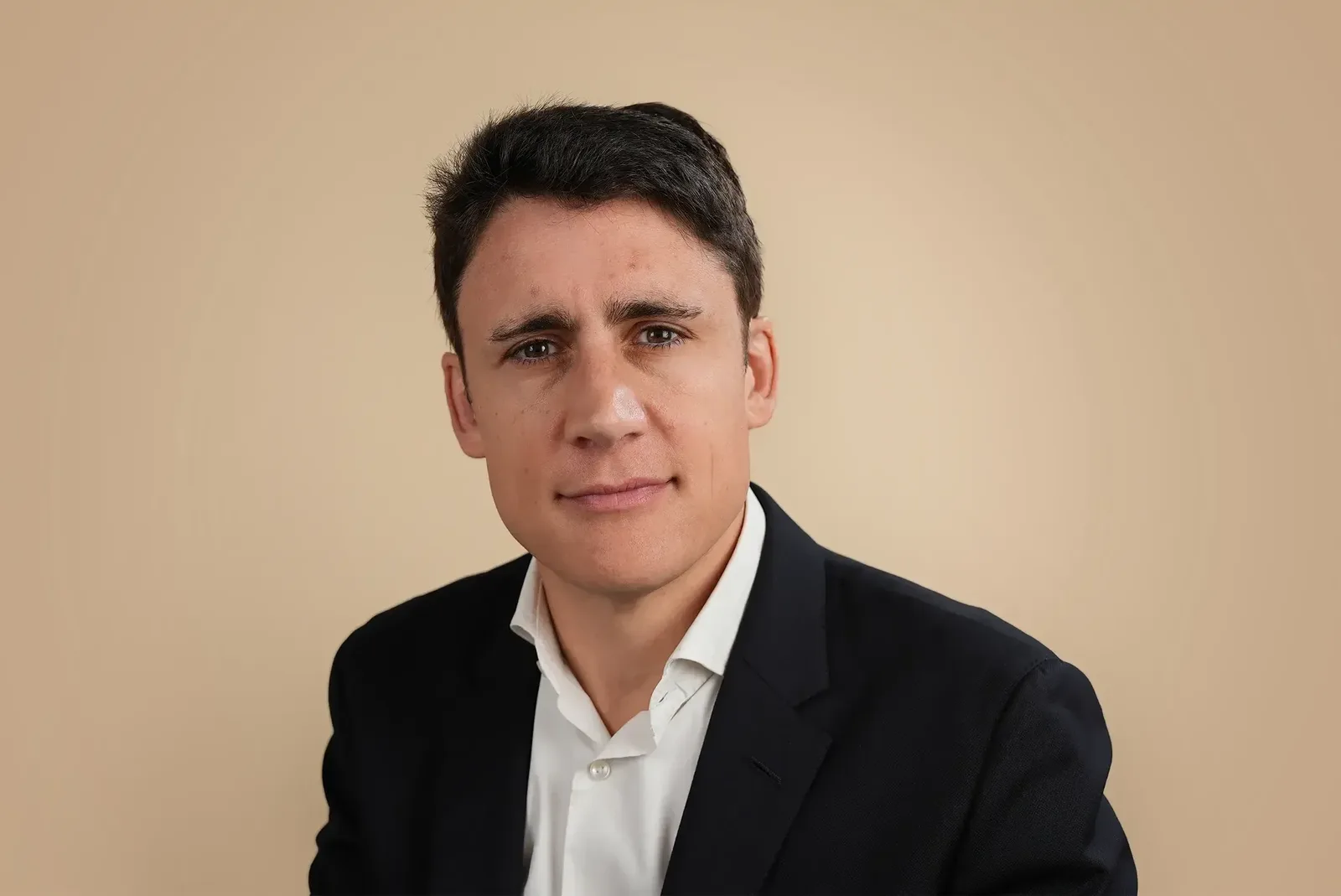
The reference surgeon for this page is Dr Santiago Elvira i Barberà, plastic surgeon and co-founder of Clínica EGOS (registration no. 49756): he signs and reviews this content. A specialist in Plastic, Reconstructive and Aesthetic Surgery and a member of the SECPRE, he studied Medicine at the University of Barcelona and trained as a plastic surgeon through the Spanish MIR residency system between Seville and Barcelona. He founded Clínica EGOS together with Dr Gomes.
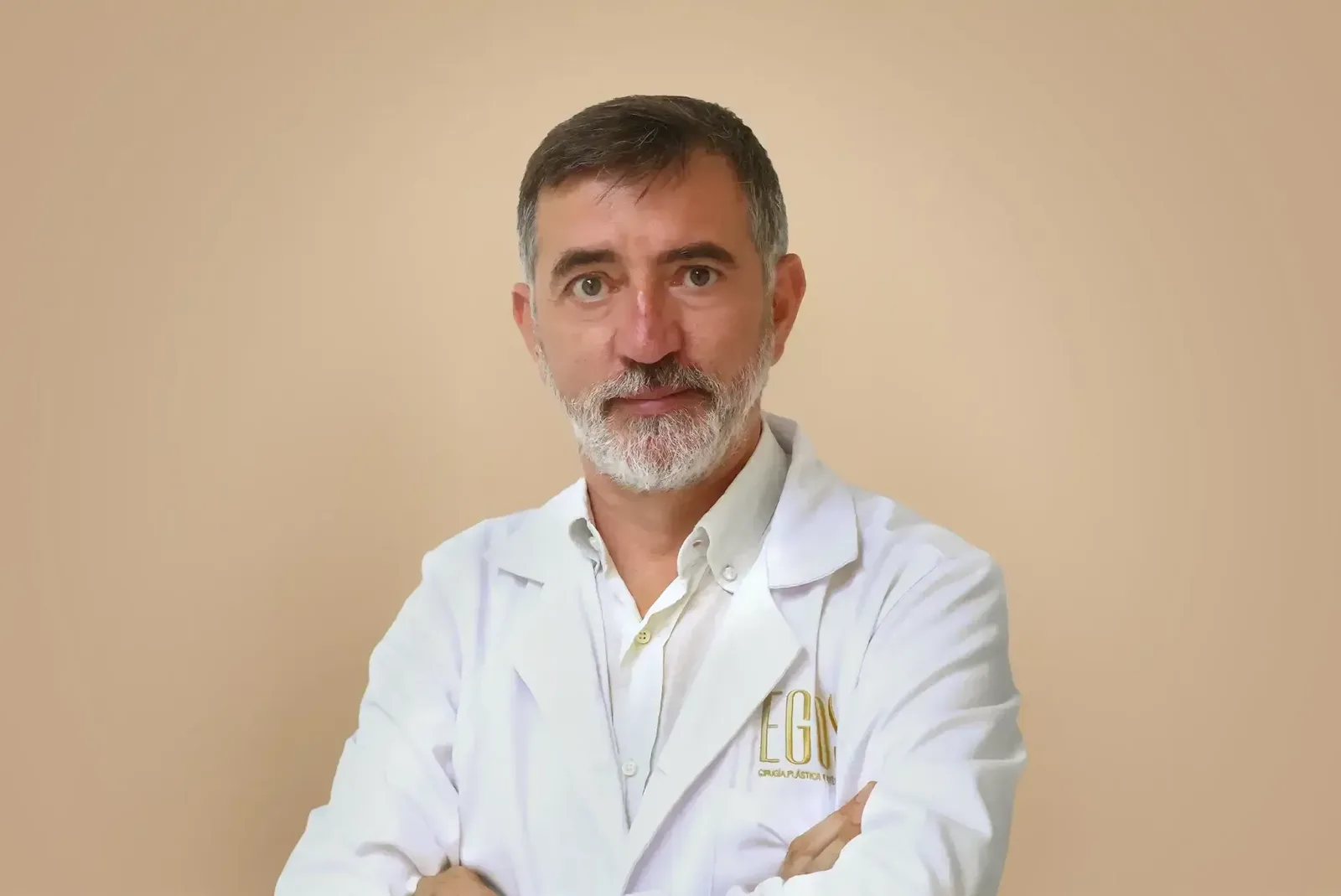
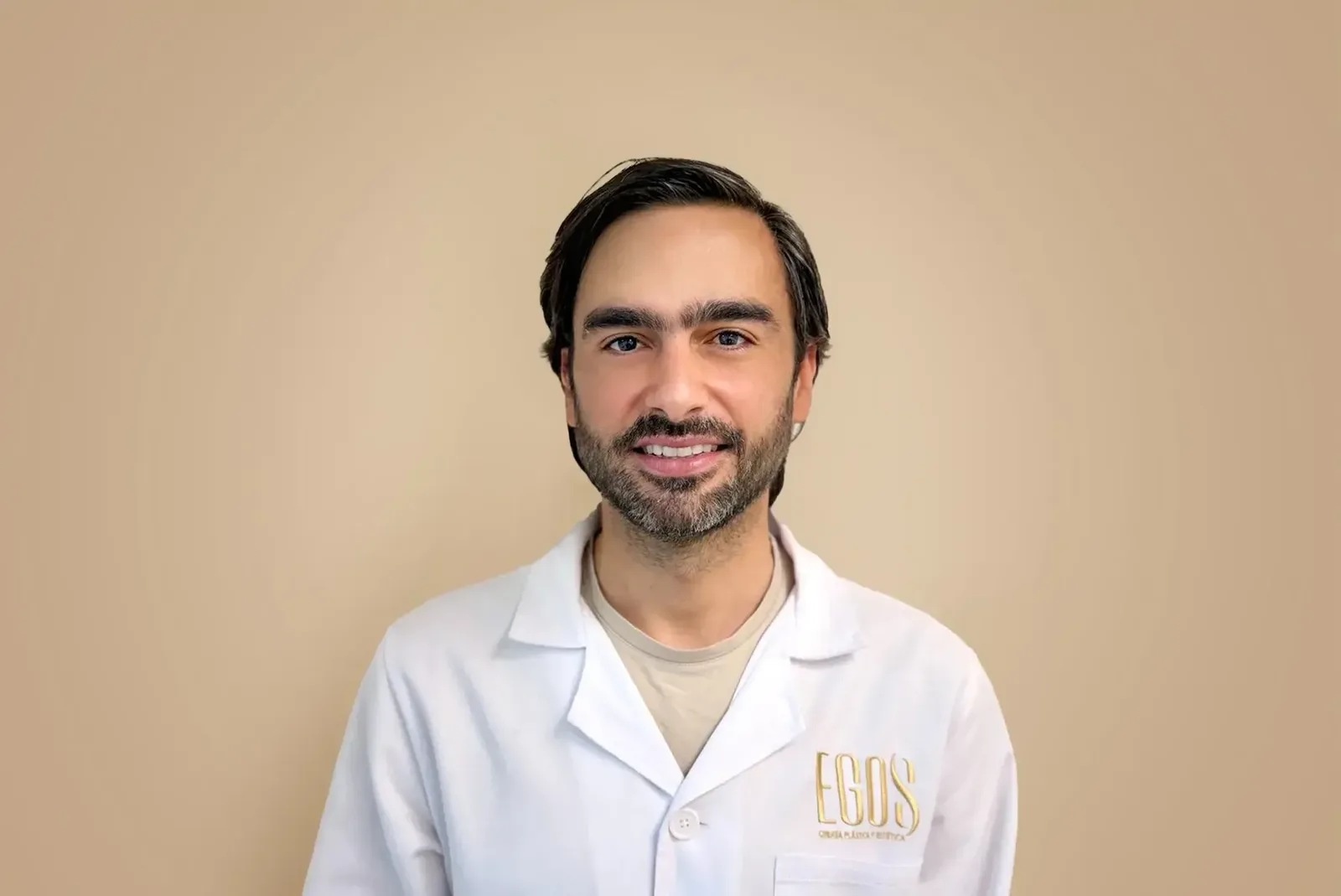
In Madrid, the plastic surgeons on our team with a public profile are Dr Gabriel Poole Derqui (registered with the Spanish medical association in Madrid, no. 280832563) and Dr Pablo Arias Abad (registered with the Spanish medical association in Madrid, no. 282874332).
Dr Poole Derqui trained in Plastic Surgery at the Vall d'Hebron University Hospital, studied Medicine at the University of Navarra and belongs to the SECPRE and to the SETGRA, which brings together surgeons working on autologous fat grafting.
Dr Arias Abad, a surgeon trained at the CES University in Colombia, completed his specialisation at the Hospital Virgen del Rocío in Seville, worked in 2015 as a fellow in Paris with a leading figure in facial and breast surgery and has practised in Madrid since 2016; breast surgery is among the areas he specialises in.
Before you book a date, we tell you in writing who will operate on you, with their registration number with the medical association, and at which centre, with its health registration number.
Where we are in Madrid
For any of the five, write to info@clinicaegos.com or call the switchboard on +34 932 71 80 69.
Chamberí
Calle de Sagasta, 3 (28004). About 75 metres away is Bilbao metro station (lines 1 and 4). Open 10 to 20 h, Monday to Friday.
Retiro
Doctor Castelo, 20 (28009), about 240 metres from Ibiza station (line 9). Same hours: 10 to 20 h, Monday to Friday.
Castellana
General Perón, 20 (28020). Roughly 470 metres away is Santiago Bernabéu, on line 10. Here it closes an hour earlier, at 19 h.
Alcobendas and Móstoles
Alcobendas is at Paseo de la Fuente Lucha, 20 (28100) and Móstoles at Avenida del Alcalde de Móstoles, 8 (28933); both are open 10 to 20 h. In Móstoles, metro line 12 runs about 600 metres away.
Price of a breast lift in Madrid: what it depends on and what it includes
The breast lift figures that circulate online are very uneven, and that is no accident: a lift with a periareolar scar does not cost the same as one with an inverted-T scar, nor with implants as without. That is why we prefer not to put a number forward. It arrives in writing after the first consultation, once it is known which technique is right.
What it depends on
On the degree of sagging and the technique; on whether an implant or your own fat is added; on the anaesthesia; on the hospital stay, if there is one; and on whether or not it is combined with other surgery, such as liposuction or an augmentation.
What it should include
A well-prepared quote lists separately what the medical team charges, the operating theatre with the stay, the anaesthesia, the implant if applicable, the post-operative bra and the check-ups. We give it to you in writing, itemised.
Book your first breast lift consultation in Madrid
Are you considering a breast lift in Madrid? The first assessment with one of our surgeons is for looking at your case, ruling out what does not suit you and talking about the scar, and it does not commit you to surgery. If you would rather speak to someone, the switchboard is on +34 932 71 80 69; otherwise, there is the form on this page.
Sources for this page
This page draws on the ASPS sections on the breast lift (definition, candidates, preparation, recovery and results), on the text of Law 41/2002 from the Spanish Official State Gazette (BOE) and on the surgeons' profiles on clinicaegos.com, all consulted in October 2026.
Content reviewed by Dr Santiago Elvira i Barberà, plastic surgeon (registration no. 49756) · October 2026
Informative content; it does not replace a consultation with a healthcare professional. The results of any procedure depend on each patient and are assessed individually. Clínica EGOS.
Where we treat you
Clínica EGOS Madrid Retiro
Calle del Doctor Castelo, 20, Retiro, 28009 Madrid
Frequently asked questions
How much does a breast lift cost in Madrid?
It varies with the technique, with the implant if one is added, with the anaesthesia and with the hospital stay, which is why we do not give figures without knowing your case. After the first consultation we give you a written quote, itemising each element.
What is the difference between a breast lift and breast augmentation?
A breast lift raises the breast and repositions the nipple with hardly any change in size; augmentation adds volume with an implant or with fat. They can be done at the same time when the breast needs both.
What scars does a breast lift leave?
It depends on the technique: around the areola, around the areola with a vertical line, or also with a line in the fold under the breast. All are permanent and fade over time; how much depends on each person's skin.
Can you breastfeed after a breast lift?
With many techniques yes, but it cannot be guaranteed, and a later pregnancy can undo part of the lift. The ideal is to consider surgery when you no longer expect to have more children or, if that is not the case, to discuss it with the surgeon.
Can I have mammograms after a breast lift?
Yes. Tell them you have had surgery and bring, if you can, the report of the operation. Some surgeons ask for a baseline mammogram before operating.
How long do the results last?
They are long-lasting, but not permanent: the breast remains subject to age, gravity, weight changes and pregnancies. Keeping a stable weight helps to preserve the shape.
Breast lift with an implant, without an implant or with your own fat: which suits me?
Without an implant, if you have enough volume and do not want a larger size; with an implant, if as well as lifting you want volume; with fat, if a little fullness is missing and there are donor areas. It is decided in the consultation, with your breast in front of the surgeon.
Is a hospital stay needed and what anaesthesia is used?
The operation is usually done under general anaesthesia, and in simple cases local anaesthesia with sedation can be considered. Whether there is a hospital stay or you go home that day is decided by the team, depending on your case and the technique.
Is a breast lift painful?
During the operation you feel nothing. Afterwards there is discomfort that can be managed with the painkillers the surgeon prescribes, and it eases within a few days.
Who can have the operation, and at what age?
A healthy woman, with a stable weight and who does not smoke, who is bothered by the sagging of her breast. There is no fixed age: you wait until the breast has finished developing, and the decision is individualised.
Does Spanish social security cover it?
No, unless the cause is medical. Royal Decree 1030/2006 (BOE), which defines the range of services of public healthcare, excludes procedures with a cosmetic purpose that do not respond to an injury, an illness or a malformation present from birth.
How long do you wear the post-operative bra?
For as long as your surgeon says, which is usually the first few weeks, at all hours. Wearing it to sleep as well helps keep the breast supported while it heals.
Is there another way to lift the breasts besides a breast lift?
No other technique fully replaces a breast lift, because raising the nipple and removing the excess skin requires an operation. At the consultation, the surgeon explains which options are worth considering in your case.
What happens if I lose weight after the operation?
Significant weight loss can change the breast and reduce the improvement, as the ASPS notes. It is best to reach a stable weight before surgery.
No obligation
Book your appointment and take the first step
Book a personalised assessment with our team of surgeons. We answer all your questions and design a plan tailored to you, with full transparency.